What role has climate change played in western wildfires, active hurricane season? KSAT Explains

Wildfires burning in the western part of the country and an extremely active hurricane season: these two weather phenomena have become politically charged. Conversations about both have naturally turned into conversations about climate change.

But what role has climate change played in the fires and this hurricane season?

SMART. IN-DEPTH. LOCAL: CLICK HERE FOR MORE EPISODES OF KSAT EXPLAINS

In this week’s episode of KSAT Explains, meteorologists Kaiti Blake and Sarah Spivey explain why the answer to that question is nuanced.

Western Wildfires

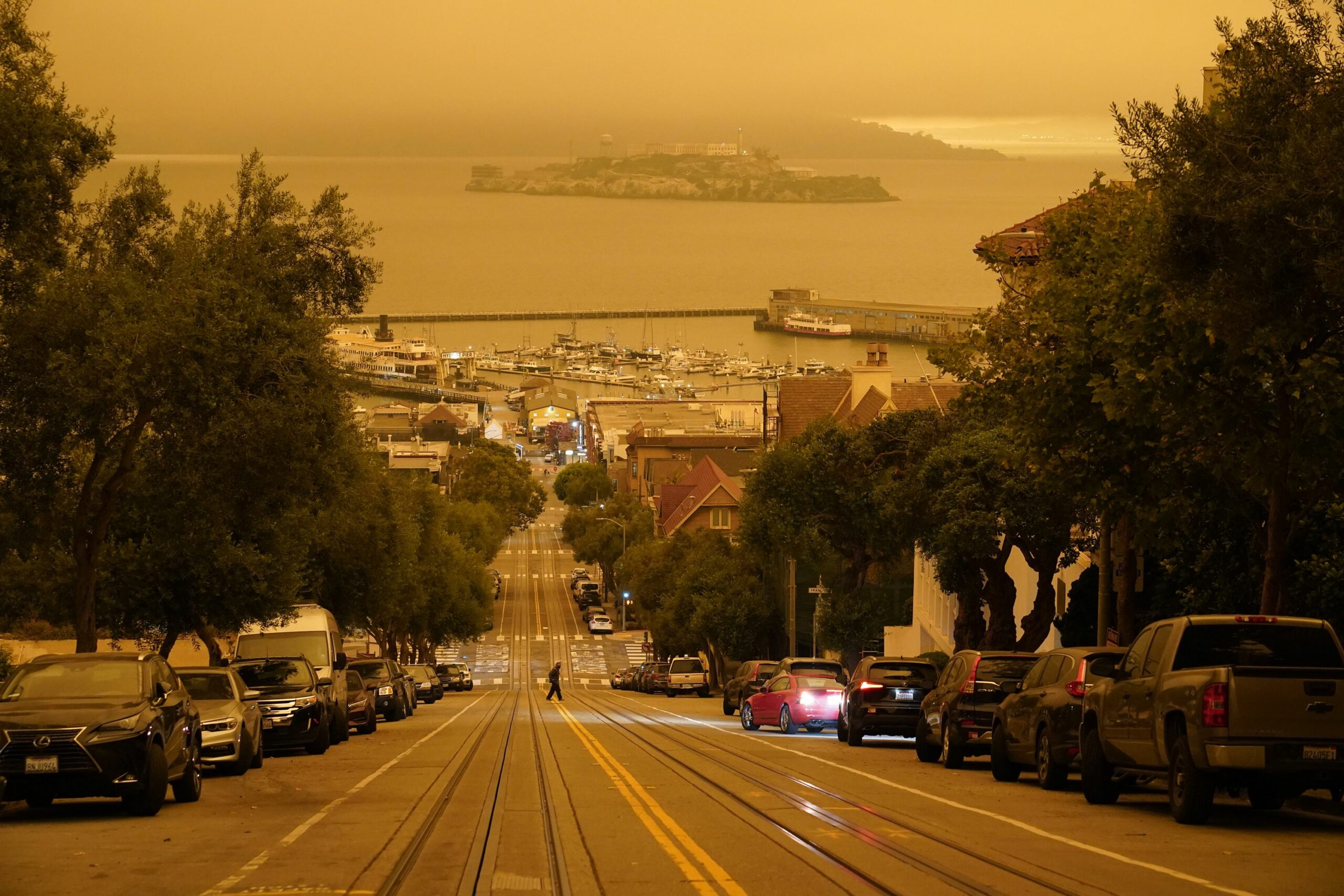
You’ve probably seen the images by now. In early September, video and pictures emerged of a creepy, orange glow filling the skies over San Francisco due to smoke from surrounding fires.

Wildfires have affected several states this year, but it certainly seems that California has been experiencing the worst of it.

Here’s an overview of the the damage the wildfires have caused in California as of Oct. 7:

More than 8,300 wildfiresMore than 8,600 structures damagedAt least 31 people killedNearly four million acres burned

And the cost of fighting and suppressing wildfires in California is costly. Cal Fire estimates it could cost more than $370 million this year.

That number is part of a troubling trend. Take a look at the chart below to see how much costs to suppress wildfires have increased.

According to the Congressional Research Service, across the United States, ongoing wildfires in 2020 have already surpassed the 10-year annual average.

It’s a serious problem. But what’s making these wildfires worse? And what can be done to ensure improvements in the years to come?

The answer to both of these questions is twofold: both forest management and climate change.

Without proper attention to both issues, the wildfire situation on the West Coast could be repeated and made worse in years to come.

An Active Hurricane Season

For only the second time in history, the 2020 hurricane season has been so active it has exhausted the English alphabet.

The only other time this has happened was in 2005. That was the year of the devastating Hurricanes Katrina, Rita and Wilma.

And while this year has not been as catastrophic as 2005, Hurricanes Hanna, Isaias, Laura and Sally have caused more than $22 billion in damage.

This year is on schedule to be the most active Atlantic Hurricane season on record.

Of these storms, nine have made landfall on the U.S. mainland. And with Hurricane Delta expected to make landfall along the Gulf Coast after this episode debuts, we’ll have the most named storms to ever make landfall on the U.S. mainland in a single season.

Hearing this, it would be easy to attribute the increased activity to climate change. You would be partially correct, but it’s a bit more complicated than that.

What You Can Expect In This Episode of KSAT Explains

An explanation of what forest management has to do with the western wildfiresA look at how winds, heat and drier conditions contribute to the firesWhat makes hurricane frequency and intensity more intense

Why is there a battle to preserve the Alazan Apache Courts? KSAT Explains

Editor’s note: On Jan. 19 the San Antonio Housing Authority terminated an agreement with a private developer to redevelop the Alazan Apache Courts, according to a memo from District 5 Councilwoman Shirley Gonzales. Click here to learn more.

In the heart of San Antonio’s West Side, there is a community of 500 families living in one of the nation’s first and now oldest public housing developments. The roots of the Alazan Apache Courts run deep.

Generations of San Antonio families have been raised at the courts, but now it’s uncertain if the housing complex will see another generation or even another few years.

SMART. IN-DEPTH. LOCAL: CLICK HERE FOR MORE EPISODES OF KSAT EXPLAINS

In this week’s episode of KSAT Explains, we examine the current battle over the Alazan Apache Courts, their impact and the future. (Watch full episode in video player above.)

SHIFT TOWARD MIXED-INCOME HOUSING

It’s no secret the courts need improvement. They were built out of cinder blocks and do not have central air, and providing internet access is a much larger challenge than it should be in 2020.

The future of The Courts is in limbo thanks to plans for redevelopment. A couple of mixed-income developments are planned for the area.

We broke down the reason we’ve seen a shift away from public housing toward mixed-income over the past several years.

NEED FOR AFFORDABLE HOUSING

In 2018, San Antonio Mayor Ron Nirenberg’s housing policy task force released a report revealing the dire need of affordable housing in our city. The problem is that housing costs outpace incomes.

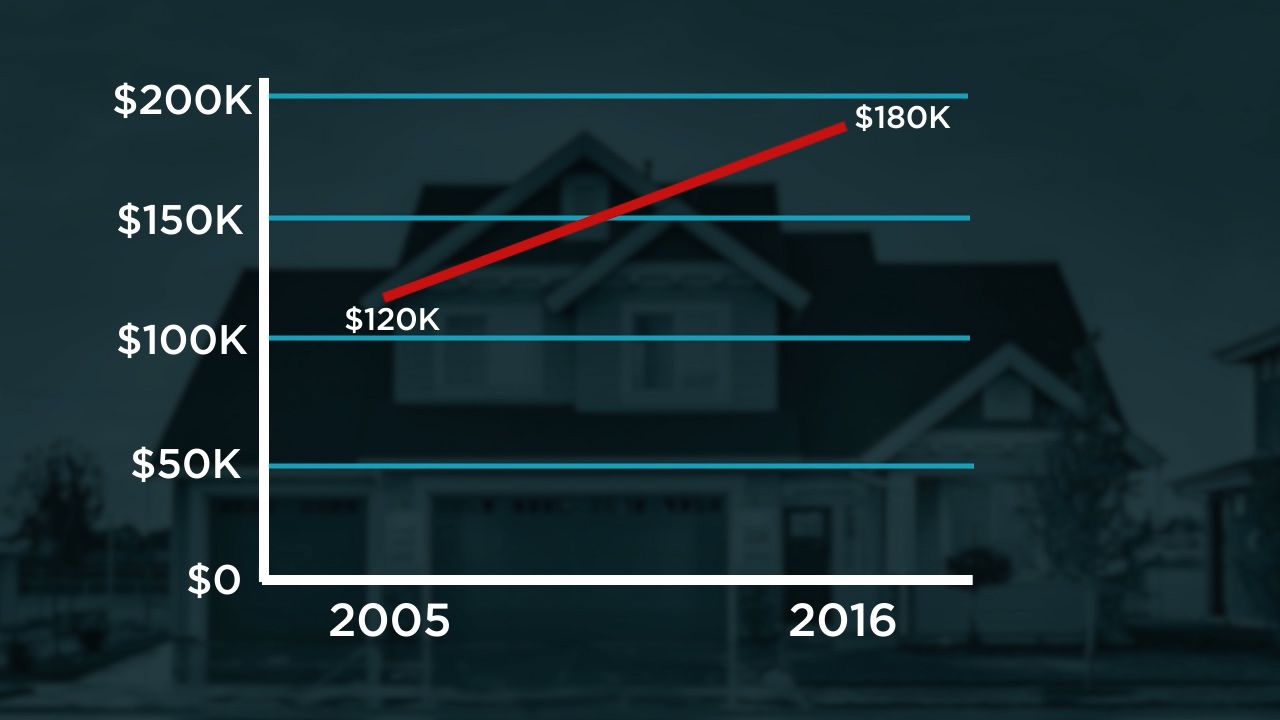
The housing policy framework found that between 2005 and 2016, the median sales price of a home increased by an average of 4.7 percent per year from $120,000 to $180,000.

The city’s area median income, or AMI, increased by an average of just 1.9 percent per year from $40,100 to $49,300.

In 2005, 54 percent of all the city’s households could not afford the median-priced home. That number increased to 59 percent by 2016.

In 2018, the city council adopted the housing policy framework to create more affordable housing.

The budget for 2019 included more than $17 million to implement those recommendations which included creating a coordinated housing system, rehabbing older homes and incentives for developers to build mixed-income developments. You can see the full report below.

SA Housing Policy Framework by RJ Marquez on Scribd

WHY PLANS FOR ALAZAN ARE CONTROVERSIAL

On the surface, plans to redevelop the courts make sense. The buildings are outdated and in desperate need of upgrades.

The San Antonio Housing Authority says there are many residents who would like to live elsewhere. But fears of gentrification and displacement are also real.

The desire for preservation extends beyond the courts and advocates are worried about maintaining the culture of San Antonio’s West Side.

KSAT’s Jessie Degollado explains why redevelopment plans are controversial.

HOW ALAZAN COURTS SHAPED WEST SIDE

The history of the courts is a major reason why a lot of people do not want to see the buildings demolished.

Here is a look at the courts beginnings and how the public housing development has changed the lives of thousands of West Side families.

QUICK GUIDE TO WHAT ELSE YOU WILL SEE IN THIS EPISODE OF KSAT EXPLAINS:

Plans for Alazan Apache CourtsDoes mixed-income housing workCultural impact of courts on West Side

Skyrocketing number of feral hogs in US has become ‘pig bomb,’ experts say

The illegal transportation of wild pigs on the “underground wild pig railroad” has caused a massive explosion in population for the animals in a term Zoologist John “Jack” Mayer has coined a “pig bomb.”

All feral hogs are wild pigs, however, not all wild pigs are feral hogs, said Mayer. “Wild-living members of the [Sus scrofa] species are commonly and consistently referred to as wild boar, or occasionally wild pigs, in the scientific literature,” according to a Wildlife Society Bulletin from 2016.

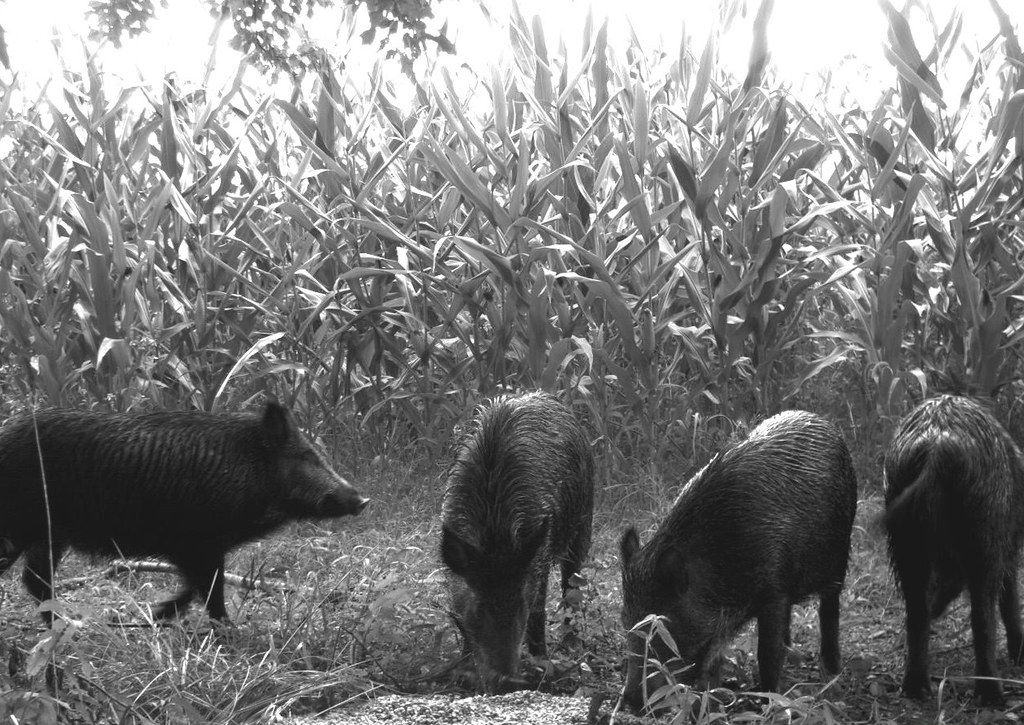
Feral hogs are an invasive species largely introduced to North America by Spanish conquistadors in the 1500s. Since then, their numbers have skyrocketed due to the lack of predators and their relatively fast reproduction rate compared to other land mammals.

Mayer, who has been working with feral hogs/wild pigs for over 40 years, told KSAT that “starting in the 1970s and 1980s, wild pigs became the second-most popular big game animals in North America; second only to white-tailed deer in the numbers harvested annually.”

He said hunters who didn’t want to drive south or to the West Coast to hunt the hogs where they were located, and “very quickly figured out that this was something that they could fix. All they had to do was get themselves a trailer-load of pigs, take them to where they wanted them, turn them loose, and the pigs did the rest.”

The USDA also sites “translocation by humans” as one reason the feral swine population is increasing rapidly. Slide through the photos below to see the difference between the feral swine population from 1982 to 2019.

Feral hogs reproduce at an alarming rate with an average of five to six pigs per litter and one to two litters per year, according to Texas A&M Agrilife Extension, which estimates the feral hog population in Texas to be 2.6 million.

Additionally, Mayer said “literally every state” has a commercial fenced shooting operation offering a “wild boar hunt” and that at least one of these operations is also leaking pigs in every state. “Wild pigs don’t fence well.”

Roland Ortiz, owner of Ortiz Game Management, told KSAT last December that he equates “hog intelligence to dog or chimpanzee intelligence,” after trapping a 271-pound boar that jumped a fence on San Antonio’s Northwest side and attacked a resident’s potbelly pigs. Ortiz noted that hogs problem solve and communicate and “if you give them a way out they’ll take it.”

The USDA notes that feral swine are “intelligent animals” and if a trap used to capture the animals is improperly set, the swine “that are not captured will then be educated and much more difficult to capture later.”

Between the illegal transportation of pigs across state lines and the leaking fence operations “this is where the Pig Bomb came from,” Mayer said.

A report from June 2020 from the USDA states that feral swine have been reported in at least 35 states and estimates that the total population is “over 6 million and is rapidly expanding.”

A bill allowing the hunting of feral hogs without a license with consent of a landowner passed unanimously in the Texas Senate in April 2019, and the law went into effect on Sept. 1 of last year.

“Feral hogs can be found in 99% of Texas counties and cause an estimated $52 million in damages to Texas agricultural enterprises each year,” according to the Texas A&M Agrilife Extension.

A 59-year-old woman was also found dead in the front yard of her Texas home last November after she was attacked by several feral hogs.

So what can be done? The USDA, which has an entire campaign called “Manage the Damage” dedicated to stopping feral swine, lists the following as ways to help manage the feral swine population:

Fencing – Fences help deter feral swine but “if motivated or agitated [swine] can destroy most fences, which should be considered during construction.”Harassment – This is effective for immediate removal of feral swine from a particular area but “is not practical on a large scale, and will likely shift feral swine problems from one area to another.”Vaccination of livestock and pets – Feral swine carry disease which could be transmitted to livestock. These diseases include “leptospirosis, brucellosis, porcine reproductive & respiratory syndrome, porcine circovirus type 2, influenza, and E. coli.”Contraception – Studies are being conducted into the development of contraception for feral swine which “may be useful for very specific situations… however, there is no registered contraceptive for use in controlling feral swine populations at this time.”Trapping – Trap, bait and location are all factors when trying to trap feral swine. “Captured feral swine should not be moved or released back into the environment, and should instead be humanely euthanized once in the trap.”Snares – This is for use in specific situations where traps are considered impractical. “To assure the humane capture and dispatch of the animal, snares must be checked regularly and all snaring rules and regulations for your state must be followed.”Ground shooting – Shooting is considered effective when there are a few feral swine in a particular area. “If larger groups are observed, shooting a few individuals of the group can disrupt the social organization and cause them to disperse even further across the landscape, thereby increasing the potential for damage.”Aerial operations – This is ideal for grasslands and open landscape and is “an effective means of quickly and efficiently reducing feral swine numbers,” but it’s not permitted in all regions and may be cost-prohibitive.Toxicants – Research is currently underway to identify a “toxicant capable of effectively and humanely removing feral swine, without having an adverse effect on the environment and non-target species.”

More feral hog content from KSAT:

488-pound feral hog killed in Texas by wildlife removal expertsAbout 550 feral hogs removed from San Antonio military bases per year, officials say13-year-old Texan takes out 400-pound feral hog wreaking havoc on ranch411 lb. wild boar caught near San Antonio golf courseFunny mix-up at Bexar County natural area causes hikers to climb tree, call 911

What is the future of transportation in San Antonio? KSAT Explains

It’s often a challenge for major cities, but a particular struggle for San Antonio: how to improve transportation across the area.

This week’s episode of KSAT Explains examines what the future of transit could look like for our city and how will we fund that future. (Watch full episode in video player above.)

CLICK HERE TO WATCH PART 1: SAN ANTONIO’S TROUBLED MASS TRANSIT HISTORY

SALES TAX TIMELINE

Part of the future of mass transportation in San Antonio could be decided with the transportation proposition that Bexar County residents will have the chance to vote on in November.

KSAT’s Garrett Brnger breaks down the long battle over an eighth of a cent sales tax that could help fund the future of transit in San Antonio.

HOW WILL EXTRA MONEY BE USED

If the ballot proposition passes in November, VIA will receive additional funding in 2026, but how will that extra money be used

We broke down the goals for transportation that will involve more than just adding new routes and more buses.

Those goals come with a cost which means San Antonio will need to increase current funding options and possibly find other sources. We currently fund transportation projects in the following ways:

Federal gas taxState gas taxSales taxVehicle registration feesBond funds

Increasing the state gas tax is one option for increasing funds. It has been 20 cents per gallon since 1991. General obligation bonds are another option, but require voter approval.

Other funding options include toll roads or a vehicle miles traveled (VMT) tax which charges drivers based on how many miles they have traveled.

OPPOSITION TO MORE VIA FUNDING

Not everyone agrees that giving more money to VIA is the clear cut solution to San Antonio’s transit issues.

District 10 Councilman Clayton Perry says VIA has proved its efficiency with the limited funding they receive, but he struggles with the idea of directing more tax dollars to the transit agency without a clear vision.

QUICK GUIDE TO WHAT ELSE YOU WILL SEE IN THIS EPISODE OF KSAT EXPLAINS:

What going on with VIA’s North Side facility and how it’s being usedCOVID-19′s impact on transportation in San AntonioHow workforce issues and transit are interconnected in San AntonioWhy transportation affects everyone

WATCH PART 1 OF KSAT EXPLAINS DEEP DIVE INTO MASS TRANSIT IN SA

Why does San Antonio struggle with mass transit? KSAT Explains

Editor’s note: The Nov. 2, 2021 KSAT Explains livestream features portions of a previously aired episode. You can watch it live in the video player above. After Tuesday night’s livestream, you will be able to watch the 2020 version as a video on demand.

Transportation is a vital part of any major city, but it can also be one of the biggest sources of frustration.

SMART. IN-DEPTH. LOCAL: CLICK HERE FOR MORE EPISODES OF KSAT EXPLAINS

Many people have argued for years that more needs to be done to when it comes to mass transit in San Antonio.

From streetcars to light rails, there have been efforts to expand transportation offerings, but these efforts have not been successful.

Our primary mode of public transportation is VIA Metropolitan Transit, but there has been an ongoing struggle for years for added funding for the transportation service.

In this week’s episode of KSAT Explains, we examined San Antonio’s troubled mass transit history, the challenges ahead as our city continues to grow and what and lies down the road for VIA.

(You can see the full episode in the video player above.)

VIA OFFERINGS

When people think of VIA, they likely think of buses and that is still the transit agency’s mainstay.

Since it was founded in 1977 and hit the streets a year later, VIA has expanded ways to get riders get around the city.

Today, VIA operates 479 buses and 139 vans that travel on 96 routes in more than a dozen Bexar County member cities. We looked at how VIA has worked to meet the different needs of different riders.

FAILED TRANSPORTATION OPTIONS

Over the past two decades, there have been efforts to expand San Antonio’s transportation options.

One of VIA’s more ambitious proposals was for a $1.5 billion, more than 53-mile light rail system that would have stretched across the city.

Voters rejected the quarter cent sale tax increase to fund it in 2000.

In 2011, VIA introduced the modern streetcar project, but the $280 million dollar proposal was met with push back and ultimately fell apart.

COMPARING SA TO OTHER MAJOR TEXAS CITIES

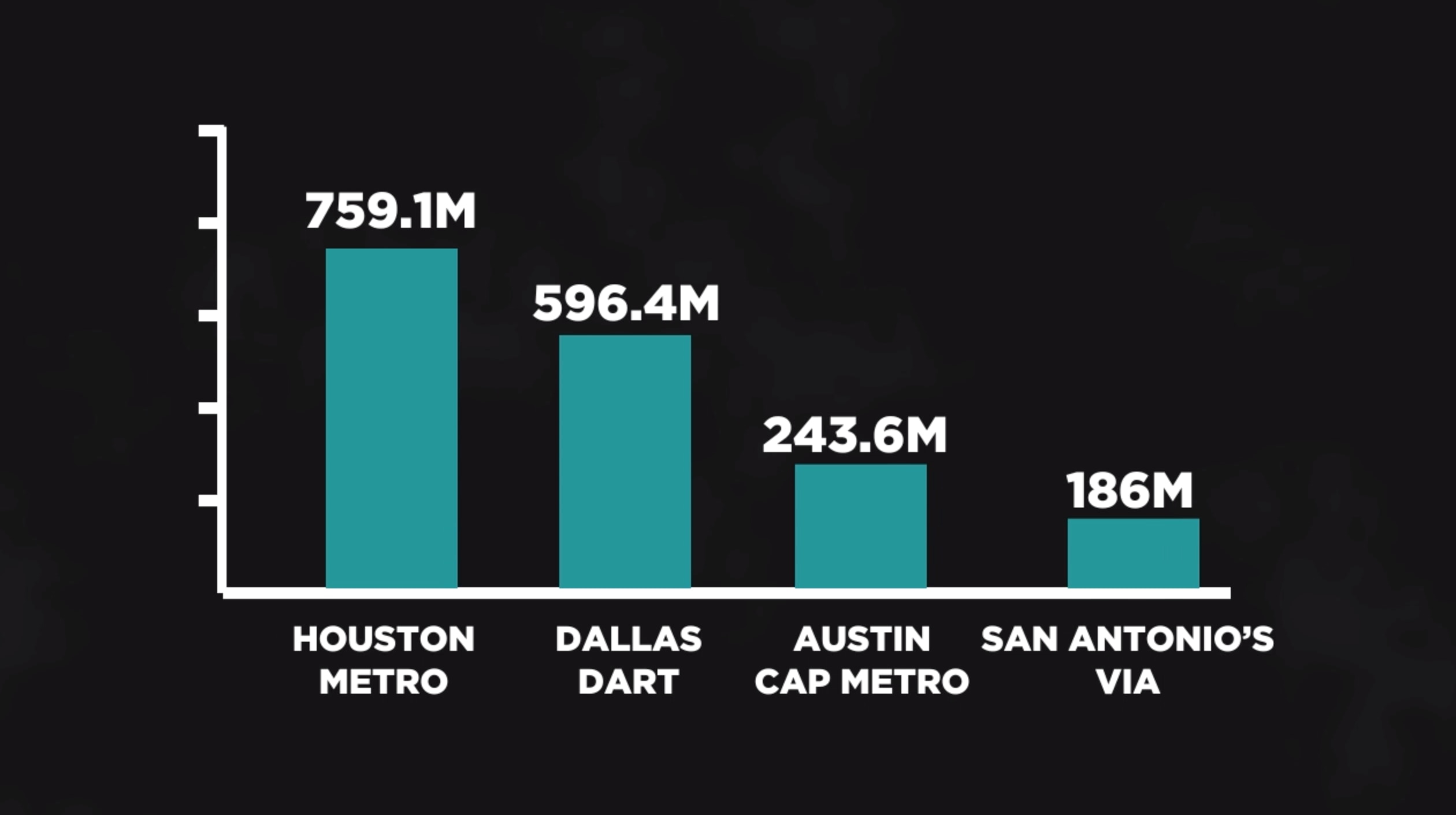
VIA is underfunded compared to transportation entities in other major cities in Texas.

It’s one of the largest transit agencies that receives fewer operating dollars compared to Dallas, Austin and Houston. Those cities all get one full cent from sales tax.

VIA receives 5/8th of one cent, 1/8th through the advanced transportation district funds and half a cent through sales tax.

As the image below shows, it adds up to all of those cities, including Austin, having more funding that San Antonio.

Transportation like nearly everything else comes with a cost so when funding falls short, so does service.

We broke down some of the disparities in time and distances that current bus riders may face compared to those who use a car.

PUBLIC TRANSIT CRITICAL TO EQUITY

According to a VIA survey, 58 percent of its riders live in households without a car.

Having a reliable public transportation is necessary to many underserved communities and critical in the fight for equity.

QUICK GUIDE TO WHAT ELSE YOU WILL SEE IN THIS EPISODE OF KSAT EXPLAINS:

The history of VIA Metropolitan Transit and its funding issues from the startMeet some of the people who rely on VIA to get to work, school or run errandsHow much progress San Antonio has made with its transportation goals set out a decade ago

What will it take to discover a COVID-19 vaccine? KSAT Explains

We have been living with COVID-19 for the better part of 2020. The virus has infected millions of people, killed hundreds of thousands around the world and upended our daily lives.

Many people believe life will return to normal with a vaccine. It’s not that simple.

SMART. IN-DEPTH. LOCAL: CLICK HERE FOR MORE EPISODES OF KSAT EXPLAINS

In this week’s episode of KSAT Explains, which can be streamed in the video player above, we examine the challenges to create a potential vaccine, how they are tested and how long it takes before a vaccine can safely be introduced into the general population.

According to The New York Times, there are more than 165 COVID-19 vaccine trials underway.

The trials are broken up by phases and some of the research is being conducted in San Antonio.

Below is a video that explains how San Antonio is involved and a chart from the CDC which shows the vaccine life cycle.

Vaccine Safety Process From CDC by RJ Marquez on Scribd

HOW VACCINES WORK WITHIN THE HUMAN BODY

Vaccines help the human body develop an immunity to a disease by imitating an infection. Here’s a breakdown of how they work within the human body.

HISTORY OF VACCINES

Vaccines have evolved over centuries and have become a part of human life. We look at the history of immunizations dating back to 1000 AD.

QUICK GUIDE TO WHAT ELSE YOU WILL SEE IN THIS EPISODE OF KSAT EXPLAINS:

How quickly vaccines have been made in the pastWhat makes San Antonio well-positioned to host COVID-19 vaccine clinical trialsThe new set of challenges that will be presented in communities if a COVID-19 vaccine is approved

What will new school look like during COVID-19 pandemic? KSAT Explains

The discussions surrounding the start of a new school year are completely different this year.

Instead of shopping for new backpacks and outfits for the first day of school, parents are checking Wi-Fi connections and watching for updates from their school districts.

SMART. IN-DEPTH. LOCAL: CLICK HERE FOR MORE EPISODES OF KSAT EXPLAINS

The upcoming school year, like so many aspects of life during the COVID-19 pandemic, has been uncertain.

At the center of the discussions being had is how do we keep our students and teachers safe, while also making sure no child falls behind in the process?

This is what we wanted to explore in this week’s episode of KSAT Explains.

In this episode, you will hear from local superintendents, educators, parents and students from all parts of the city. They shared their concerns with in-class instruction, classroom safety and the pros and cons of remote learning.

HOW WE GOT HERE

There has been so much uncertainty that it can be hard to wrap your head around what plans are for back-to-school.

Information seems to change by the day and the guidelines for this upcoming school year have been hard to follow.

Krista Torralva, an education reporter with the San Antonio Express-News, spoke to KSAT Explains about the ever-changing landscape and the back-and-forth between the Texas Education Agency, state officials and local health authorities.

LOCAL SCHOOL DISTRICT PLANS

Plans to reopen classrooms are an evolving work-in-progress for every San Antonio-area school district.

Districts that have released guidelines have to remain flexible as they watch how the virus continues to affect the community.

KSAT Explains spoke to the superintendents of Edgewood, Northside and San Antonio ISDs about the challenges of leading educators in this pandemic, and some of the biggest things weighing on their minds as they plan for the school year.

TEACHER CONCERNS

Not until it’s safe. That’s the message we have heard from some teachers preparing for the new school year. KSAT Explains spoke with three area teachers to hear what they think about returning to the classroom.

QUICK GUIDE TO WHAT ELSE YOU WILL SEE IN THIS EPISODE OF KSAT EXPLAINS:

Parents discuss the difficult decision they face in sending their children back to classrooms.How Texas private and parochial schools will approach back-to-school.Is homeschooling an option for parents and what is a neighborhood “school pod?”What some local students are saying about a possible return to classrooms.How a recent UIL decision has affected the start of high school sports in Texas this fall.

For this episode, we created a word cloud to determine what subjects our educators, parents and students discussed the most.

Avoid these notorious roadways prone to flooding during heavy rain in San Antonio

In San Antonio, it’s not a matter of if flooding will occur every year, it’s a matter of when.

Every year, flash floods happen across the city as heavy storms move through the area, often during hurricane season. Bexar County officials monitor 178 low-water crossings, updating road closures when they occur.

Drivers warned to ‘Turn Around, Don’t Drown’

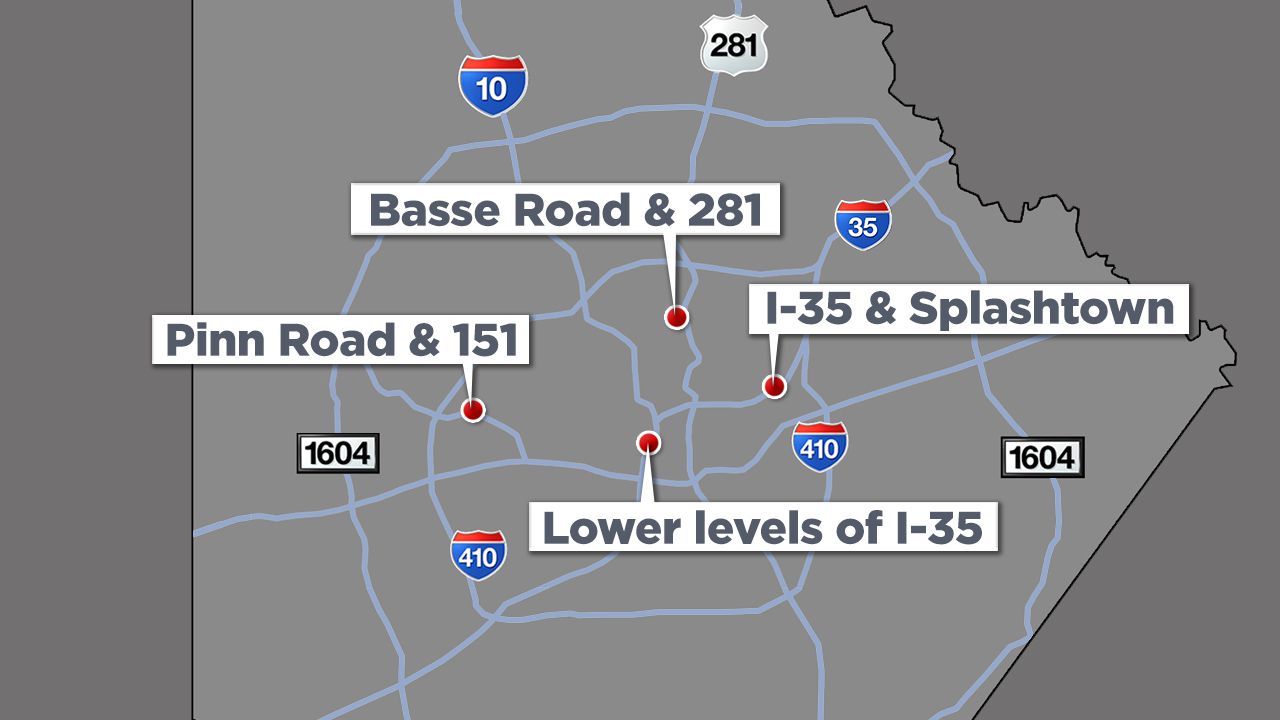
While more seasoned residents know which places to avoid, newer residents may not know which areas are most prone to flooding:

Salado Creek at I-35:

When heavy rain falls, the water pools up on the access roads, resulting in closures in the area.

Basse Road and 281:

After heavy rains, Olmos Creek will quickly rise, flooding the roadways it runs through.

Pinn Road:

Pinn Road and Highway 151 has been the scene of some notable high-water rescues before. Leon Creek runs below the road, leaving it prone to flooding.

Lower levels of I-35:

The lower levels of I-35 tend to shut down after heavy rains lead to flash floods on the highway.

While those are some of the most well-known flooding spots, intersections around San Antonio can also flood, depending on where the rain falls.

Find the latest on the storms here from KSAT’s meteorologist, including forecasts, warnings and watches and an interactive radar.

Where to get tested for COVID-19 in San Antonio, Bexar County

The number of facilities that are able to test for COVID-19 in Bexar County continues to grow.

Anyone who is experiencing symptoms, including fever, cough, and shortness of breath can be tested. Symptoms of COVID-19 may appear in as few as two days or as long as 14 days after exposure. (More below on asymptomatic testing.)

What you need to know about COVID-19 testing, according to UT Health experts

If a person has a primary care physician, they can call to see if their doctor is offering testing.

Otherwise, here is an updated (on Dec. 29, 2021) list of places where someone with symptoms of the new coronavirus can get tested in the San Antonio area for free.

No-Cost Testing Facilities for People with Symptoms:

American Legion – Curative Mobile Trailer #1 – 3518 Fredericksburg Rd San Antonio 78201. Curative COVID-19 Testing Site, Curb-side, must register and be seen first, appointment required. Hours: M-F: 8am – 6pm; Sat & Sun: 8am – 6pm.Center of Advanced Wellness – 8723 Botts Lane San Antonio 78217. No Appointment Needed, Walk-In Only. Phone: 210.999.5523. Hours: M-F: 9am – 5pm; Sat: 9am – 1pm; Sun: Closed.Center of Advanced Wellness – 3107 TPC Pkwy San Antonio 78259. No Appointment Needed, Walk-In Only. Phone: 210.905.0663. Hours: M-F: 9am – 5pm; Sat: 9am – 1pm; Sun: Closed.CentroMed – Palo Alto Clinic – 9011 Poteet Jourdanton Fwy San Antonio 78211. Drive-through, appointment required. Phone: 210-922-7000. Hours: M-F: 8:30am – 4:30pm; Sat & Sun: Closed.Claude Black Community Center- Curative Kiosk #11 – Curbside, must register and be seen first, appointment required. Hours: M-F: 8am – 6pm; Sat & Sun: Closed.Conqueror’s Assembly Church – Curative Kiosk #7 – 937 W Magnolia Ave San Antonio 78201. Curbside, must register and be seen first, appointment required. Hours: M-F: 8am – 6pm; Sat & Sun: Closed.Cuellar Community Center – Symptomatic Testing Only – 5626 San Fernando St San Antonio 78237. In building, no appointment needed, walk-in only. Hours: M-F: 8am – 4pm; Sat & Sun: 8am – 4pm.Dascena Labs – Fredericksburg Rd – 612 Fredericksburg Rd San Antonio 78201. Drive-Through, appointment optional. Hours: M-F: 9am – 5pm; Sat: 9am – 5pm; Sun: Closed.Dub Farris Athletic Complex/ Spartan Testing – 8400 N Loop 1604 W San Antonio 78249. Drive-through, appointment optional. Phone: 888-998-3568. Hours: M-F: 8am – 4pm; Sat: 8am – 4pm; Sun: Closed.Edgewood Square Shopping Center – Curative Kiosk #1 – 1135 S General McMullen Dr San Antonio 78237. Curb-side, must register and be seen first, appointment required. Hours: M-F: 8am – 6pm; Sat & Sun: 8am – 6pm.Gembler Lot – 622 Gembler Rd San Antonio 78219. Appointment Required. Phone: 833-213-0643. Hours: M-F: 8am – 4pm; Sat & Sun: 8am – 4pm.Goodwill Store and Donation Center- 12332 IH 10 W San Antonio 78230. Drive-through, no appointment required. Hours: M-Sat: 8am- 6pm; Sun: 8am- 5pm.Harlandale Park – Curative Kiosk #6 – 7227 Briar Pl San Antonio 78221. Curb-side, must register and be seen first, appointment required. Hours: M-F: 8am – 3pm; Sat & Sun: 8am – 3pm.Highland Forest Elementary- Curative Kiosk #12 – 3736 SE Military San Antonio 78223. Curb-side, must register and be seen first, appointment required. Hours: M-F: 8am – 6pm; Sat & Sun: Closed.Jack Inselmann Baseball Field- Curative Kiosk #10 – 7001 Culebra Rd. San Antonio 78238. Curb-side, must register and be seen first, appointment required. M-F: 8am – 6pm; Sat & Sun: Closed.Oblate School of Theology – Curative Kiosk #8 – 285 Oblate Rd San Antonio 78216. Curb-side, must register and be seen first, appointment required. Hours: M-F: 8am – 6pm; Sat & Sun: Closed.Our Lady of the Lake – Curative Kiosk #2 – 411 SW 24th St San Antonio 78207. Curb-side, must register and be seen first. Hours: M-F: 8am -3pm; Sat & Sun: 8am – 3pm.Pittman Sullivan – Curative Mobile Trailer #2 – 1101 Iowa St San Antonio 78203. Curb-side, must register and be seen first, appointment required. Hours: M-F: 8am – 3pm; Sat & Sun: 8am – 3pm.Ramirez Community Center – Symptomatic Testing Only – 1011 Gillette Blvd San Antonio 78224. Curb-side, must register and be seen first, no appointment needed, walk-in only. Hours: M-F: 8am – 4pm; Sat & Sun: 8am – 4pm.Salvation Army Missions Corp – Curative Kiosk #9 – 3802 SW Military Dr. San Antonio 78211. Curb-side, must register and be seen first, appointment required. Hours: M-F: 8am – 6pm; Sat & Sun: Closed.Somerset ISD Central Office – Curative Kiosk #13 – 7791 E 6th St. Somerset 78069. Curb-side, must register and be seen first, appointment optional. Hours: M-F: 8am – 5:30pm; Sat & Sun: Closed.St. Mary’s University – Curative Kiosk #3 – 1 Camino Santa Maria San Antonio 78228. Curb-side, must register and be seen first, appointment required. Hours: M-F: 8am – 5pm; Sat: 8am – 5pm; Sun: Closed.University of the Incarnate Word – Curative Kiosk #5 – 7615 Kennedy Hl San Antonio 78235. Curb-side, must register and be seen first, appointment required. Hours: M-F: 8am – 3pm; Sat & Sun: Closed.Wheatley Heights First Baptist Church – Curative Kiosk #7 – 7538 Midcrown San Antonio 78218. Curb-side, must register and be seen first, appointment required. Hours: M-F: 9am – 5pm; Sat & Sun: Closed.Zarzamora Testing – Curative Mobile Van #1 – 4531 S Zarzamora St San Antonio 78211. Curb-side, must register and be seen first, appointment required. Hours: M-F: 9am – 5pm; Sat & Sun: 9am – 5pm.

Free Testing Facilities for Asymptomatic People:

Barshop Community Jewish Center – 12500 NW Military Hwy. Testing hours will be 9 a.m to 3 p.m. Monday through Friday.COVID Testing Station – Austin Highway- 1712 Austin Hwy. Drive-through, appointment optional. Phone: 210.201.6336. Hours: M-F: 9am – 5pm; Sat 9am – 1pm; Sun: Closed.COVID Testing Station – Culebra Rd- 8339 Culebra Rd. Drive-through, appointment optional. Phone: 210.201.6336. Hours: M-F: 9am – 5pm; Sat 9am – 1pm; Sun: Closed.COVID Testing Station – Nacogdoches Rd- 14092 Nacogdoches Rd. Drive-through, appointment optional. Phone: 210.201.6336. Hours: M-F: 9am – 5pm; Sat & Sun: Closed.Cuellar Community Center – 5626 San Fernando St. The hours are 8 a.m. – 6 p.m. Monday through Friday and 9 a.m – 4 p.m. on Saturday. Appointments are not required, and walk-ins are welcome. Proof of insurance is not required.Dascena Labs – 2300 Oakhill Rd San Antonio. Appointments are optional.Dub Farris Athletic Complex/ Spartan Testing – 8400 N. Loop 1604 W. The hours are 8 a.m. – 4 p.m. Monday through Friday. Appointments are optional but pre-registration is encouraged. Proof of insurance is not required.Rackspace Technology Headquarters –1 Fanatical Place near I-35 and Walzem. Testing hours will be 8 a.m. to 6 p.m. Monday through Friday.Ramirez Community Center – 1011 Gillette Blvd. The hours are 8 a.m. – 6 p.m. Monday through Friday and 9 a.m – 4 p.m. on Saturday. Appointments are not required, and walk-ins are welcome. Proof of insurance is not required.

The San Antonio Metropolitan Health District has opened a COVID-19 Hotline for residents to ask questions about the virus. Residents can call 311 and select option 8. The hotline is available in English and Spanish from 8 a.m. to 5 p.m., Monday through Friday and 8 a.m. to 12:00 p.m. on Saturday and Sunday.

Testing Facilities with Fees/Medical Insurance:

There are also many places where someone either with symptoms or without can get tested for a fee and/or with medical insurance. Click on the links to find the locations and protocols for each facility.

Advanced Diagnostic Laboratory LLC – 901 N Loop 1604 W Access Road, San Antonio, 78232Alamo City Urgent Care – Multiple LocationsARCPoint Labs of San Antonio West – Medical CenterBexarAid – 2015 Broadway St, San Antonio, 78215CommuniCare Health Centers – Multiple LocationsComplete Diagnostics – Multiple LocationsCOVID Drive Up – 6011 Broadway St.COVID Drive Up – 4747 Fredericksburg Rd.Davies MedClinic – Multiple LocationsDNA Reference Lab, Inc – 5282 Medical Dr., Ste 312, San Antonio, 78229FastMed – Multiple LocationsFull Spectrum Emergency Room & Urgent Care at the RimImpact Urgent Care – Multiple LocationsInnovative Urgent Care & Family Health Clinic – Multiple LocationsLASO Health – 4511 NW Loop 410, San Antonio, 78229Little Spurs Pediatric Urgent Care – Multiple LocationsLivingston Med Lab – 18322 Sonterra Place, Suite 101, San Antonio, 78258MacGregor Medical Center – 9969 Fredericksburg RdMD Toxicology Group, LLC – 11827 Starcrest DrMedPost Urgent Care – Multiple locationsPJW Health Services – 7710 W I-10, San Antonio, 78230Premier Health TX – 8332 Fredericksburg RoadSan Antonio78229Prompt Urgent Care – 5893 Babcock Rd, Ste # 103, San Antonio, 78240Quality Forensic Toxicology – 4726 Shavano Oak, Ste # 105San Antonio 78249Quality Urgent Care – Multiple locationsSouth Texas Allergy & Asthma Medical Professionals- STAAMP – Multiple locationsTexas MedClinic – Multiple locationsWalmart Pharmacy Drive-Through – 8923 W Military DrSan Antonio

The Texas Division of Emergency Management (TDEM) and the Texas Department of State Health Services (DSHS) have launched an interactive online COVID-19 test collection map to help Texans locate test collection sites within their community. See the map below:

More on KSAT:

How to register for the COVID-19 vaccine in San Antonio when appointments are availableWhat if I get COVID-19 before getting the 1st or 2nd dose of the vaccine?Click here for the latest news on the COVID-19 vaccine

City employees fired after keeping seized disability placards, records show

UPDATE: Upon appeal, Claudia Moreno-Devora had her termination reduced to a suspension and has since returned to work.

Two employees with San Antonio’s Center City Development & Operations Department have been fired after an investigation found they exchanged disability parking placards that should have been reported to the state and destroyed.

City officials confirmed that Claudia Moreno-Devora and Veronica Douglas were both terminated.

Municipal court supervisor accused of slapping security guard, calling him ‘rent-a-pig’

Discipline paperwork for Moreno-Devora, obtained by the KSAT 12 Defenders through an open records request, shows that she coordinated with Douglas to get disability placards that had been seized by parking enforcement officers.

Moreno-Devora also provided her city parking card to a co-worker for their personal use, according to the documents.

Moreno-Devora was also accused of refusing to answer inquiries from city officials attempting to investigate her possible wrongdoing.

Her dismissal paperwork, finalized in late October, found that she violated rules related to fraud, waste and abuse and procedures for seized disability placards.

Attempts by the Defenders to reach Moreno-Devora and Douglas for comment were unsuccessful.