There are nearly 3,000 caves in the Texas Hill Country and you can explore 12 of them

Caves likely aren’t the first thing that comes to mind when you’re thinking of things to do in the San Antonio area, or Texas for that matter, but there are thousands just in the Hill Country alone.

According to co-owner of Natural Bridge Caverns Travis Wuest, there are nearly 3,000 caves in the Hill Country region. Contrary to popular belief, Wuest told the Texas Historical Commission that these caves are not connected by a vast underground system.

Of the thousands of caves in our area, however, there are 12 within a three-hour driving distance from downtown San Antonio that you can explore.

The closest cave to San Antonio’s city center is Robber Baron Cave, which only opens to the public every couple of years. You’ve likely driven right by it and not even realized it was there. The last time the cave opened to the public was in 2019, and due to the coronavirus pandemic, there isn’t an open house that is currently planned.

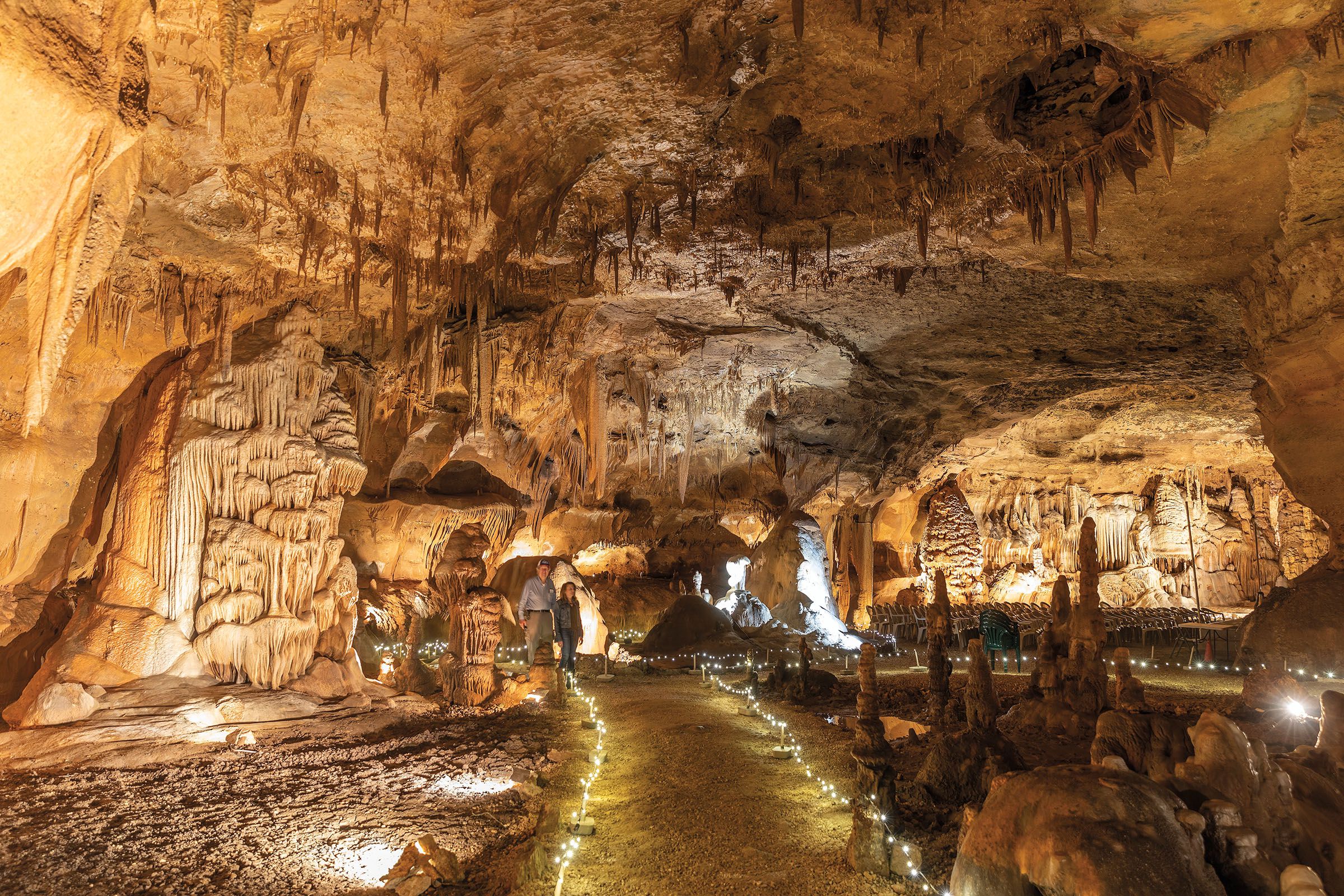
One of the most well-known caves in our area that is open for exploration year-round is Natural Bridge Caverns, which offers tours through certain areas of its cave system. Back in 2019, Wuest and his brother, Brad Wuest, who co-owns Natural Bridge Caverns, took a 19-hour trip deep into the caves and discovered underground lakes and additional massive chambers. Read more on that here.

Another popular cave that’s just a short drive from San Antonio is Bracken Cave — home to the largest bat colony in the world. Every June, the Mexican free-tailed bats at Bracken Cave give birth to one pup each, bringing the total population up to about 20 million bats. The cave isn’t open to the public, but members of Bat Conservation International are typically able to view the bat emergence on certain designated nights each year. Learn more about becoming a member here.

Cave Without a Name in Boerne is another local cave that offers explorers a chance to visit, but this cave is also unique in that it hosts concerts.

Cascade Caverns and Wonder Cave are also close to San Antonio if you’re looking for something to do but don’t want to drive too far. View the 12 caves you can visit on the map at the top of this article.

Call ahead or make reservations online on the cave’s respective websites before driving to see these natural wonders. The coronavirus pandemic may have shifted hours of operation or reservation policies.

Fun Fact: If you’re looking to visit the largest cave in Texas, you’ll have to shell out about $26 million. Fern Cave is the deepest cave in Texas, and it’s on private property, but that property is currently for sale. Check out Monarch Ranch here.

Related:

Can show caves in Texas and around the world survive after COVID-19?Family owned and operated cavern offers ‘Discovery Days’ every weekend in June

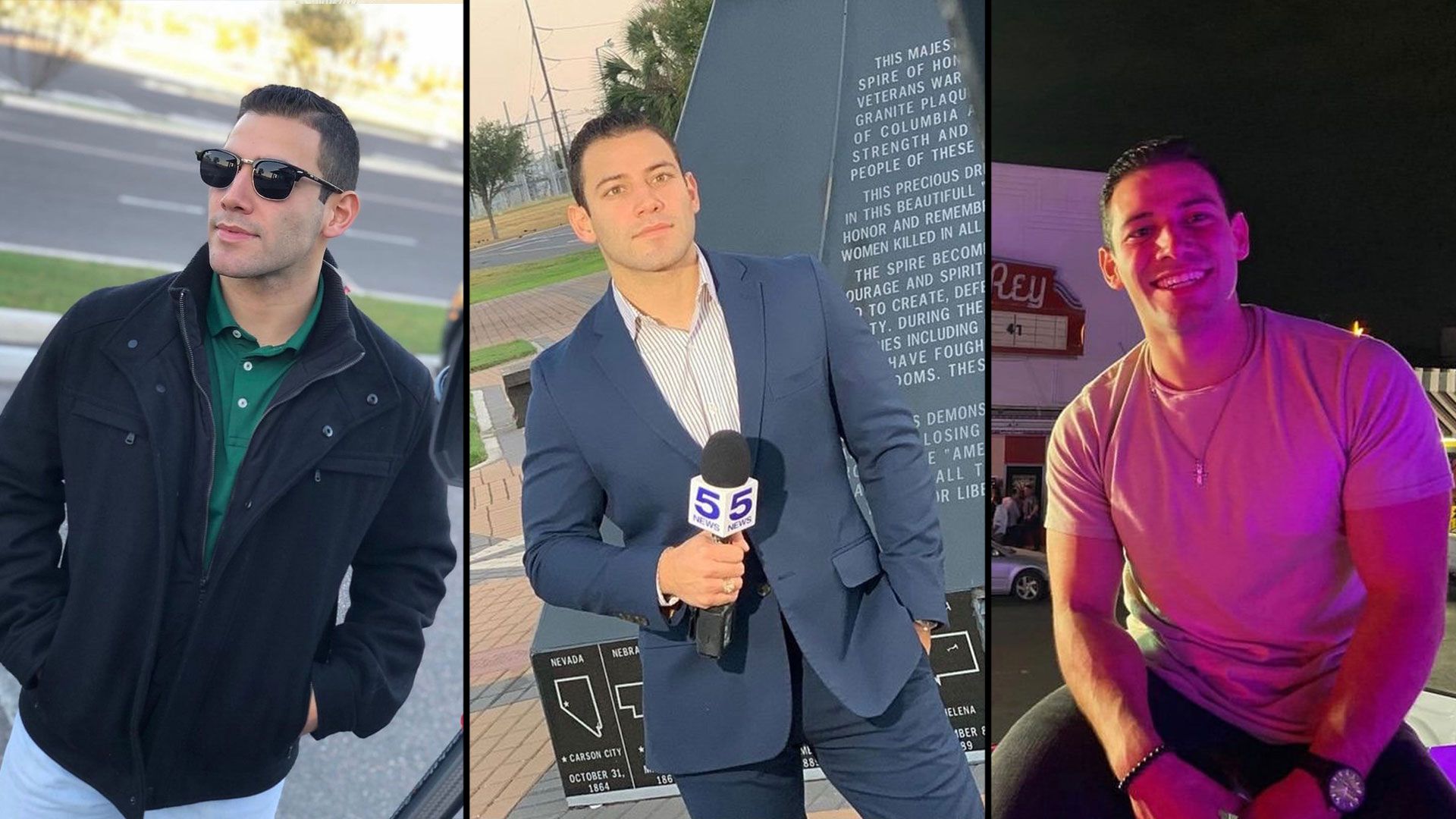
Meet John Paul Barajas, the newest reporter at KSAT with a familiar name

Wait, do I know that guy? You might be wondering why the newest KSAT reporter looks familiar.

John Paul Barajas, who joined the talented KSAT 12 news team this week, is one of a number of Barajas men who have worked at KSAT in the past.

We asked John Paul to chat with us and answer a few questions so you can get more familiar with the new face you’ve likely already seen on your television, mobile apps and streaming services. (Keep up with John Paul on social media! He’s on Twitter and Facebook.)

When do you officially go on air and which newscasts can people find you on?

I went on air on my first day for breaking news. That was June 28.

I’ll be on the evening newscasts, including the 5 p.m., 6 p.m. and 10 p.m. Nightbeat Wednesday through Sunday, for now.

What’s your history in the news? Where did you start and how did you end up at KSAT?

My dad, Mike Barajas, is the first in my family to work in news. He anchored in Houston for many years. Then my cousin came along, Erik Barajas, and he worked at KSAT, too, before moving to Houston. Then my older brother – he’s the middle of the family — Bill Barajas, was here at KSAT as well. He’s now working in Houston, too.

I got my start in news in 2018 with KRGV – the ABC affiliate station in the Rio Grande Valley. I worked there for three years before signing with KSAT a few months back. While at KRGV I worked as a reporter, weekend anchor and then weekday morning anchor.

What made you want to get into journalism?

Well, if my last answer didn’t give it away… ha! My family definitely had a big role in my wanting to get into this business. They never pushed us to do it or even encouraged it but I always looked at TV news differently and had more of an interest in it than I think most kids do growing up.

Have you ever lived in San Antonio before?

Only for about three months when I interned with KSAT while I was still in college. But that was a number of years ago.

What’s a story that you’ve covered that you’re particularly proud of and why?

This is tough, but I think just because of the level of trust my station had in me – and regardless of your political views – any time you cover a president or vice president it’s pretty cool and definitely a different experience. So I’d have to say it was when I was covering former Vice President Mike Pence’s arrival in the valley to visit the border. I was in the airport hangar and we went live as soon as we saw his plane descending towards the runway. It was an incredibly long day.

What’s an embarrassing on-air moment you’ve had?

The most recent was my first day at KSAT when I tagged out of my 5 p.m. package. I started to tag out “channel 5” (my previous station) and caught myself mid-word and stopped to say “KSAT 12 news.”

What are you looking forward to most about working at KSAT?

Whenever you start at a new place I think it’s important to try and learn as much as you can from those who have been doing the job longer than you have. So starting here at KSAT I’m excited to have a brand new set of veteran journalists and the opportunity to pick their brains.

Do you have any hidden talents you’re comfortable sharing?

I might but I can’t think of any off the top of my head. Also, if I had a talent I would probably make it known pretty quickly. I can’t be keeping that from the world.

What is your favorite holiday and how do you celebrate it?

Christmas! My family always has a big get-together on Christmas eve with all my aunts, uncles and cousins. I’m huge on family so it’s always a good time to hang out and catch up. Also, some would say “it’s the most wonderful time of the year.”

What is your go-to for breakfast tacos? (Or maybe you’re more of a pancake person?)

No go-to spot yet, but I’m looking forward to finding one. I’m definitely a taco as opposed to a pancakes guy.

What’s your goal for the future in the news?

No set-in-stone goal. I just try and keep getting better and see where my career takes me. But since all my family is in Houston, I definitely wouldn’t be opposed to ending up there someday.

Anything around town that you’re excited to try?

Six Flags. I love roller coasters!

Anything about yourself that you want people to know?

I love sports – football, basketball and baseball, in particular. But, I could sit down and watch any sport. I’m a die-hard University of Houston fan – my dog is even named after the mascot “Shasta,” but don’t tell her she was named after a cat.

As promised, sheriff fires BCSO lieutenant who was at deadly Capitol riot

UPDATE 6/24/21 (VIDEO BELOW STORY): The attorney of the former Bexar County Sheriff’s Office lieutenant who was fired months after posting multiple photographs to Facebook showing her near the U.S. Capitol during the deadly Jan. 6 riot says he’s planning to file a wrongful termination lawsuit.

(Original Defenders Report)

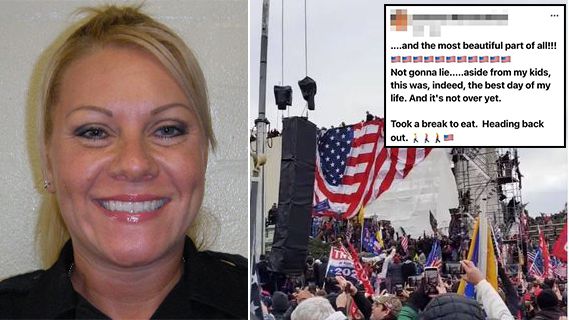
A Bexar County Sheriff’s Office lieutenant who posted multiple photographs on Facebook showing her near the U.S. Capitol on Jan. 6 as a protest erupted into a deadly riot has been fired, BCSO officials confirmed Wednesday night.

Lt. Roxanne Mathai, 46, was given an order of dismissal five months after BCSO Sheriff Javier Salazar said he intended to never have her set foot in a BCSO building again.

Mathai’s attendance at the insurrection first became public in a report by the KSAT 12 Defenders on Jan. 7. She later claimed through an attorney she was unaware of the bloodshed, including a slain police officer, at the riot.

Pictured in a red, white and blue mask and draped in a President Donald Trump flag, Mathai posted photos throughout the day Jan. 6 as the world watched Washington, D.C., burst into chaos.

In the photos, Mathai was shown walking and states she was headed to the Capitol after listening to Trump deliver a speech during the “Save America March.”

Mathai also posted a picture showing rioters after they had broken through a police line and occupied the balcony of the Capitol.

“……And we are going in……in the crowd at the stairs…not inside the capitol like the others. Not catching a case lol,” wrote Mathai next to a selfie and several photos of rioters scaling scaffolding in front of the Capitol.

“Not gonna lie…..aside from my kids, this was, indeed, the best day of my life. And it’s not over yet,” wrote Mathai alongside another series of photos.

She included the American flag emoji in the captions of images of hundreds of President Donald Trump supporters breaching the federal legislative building, a sight not seen since the War of 1812.

Days after the fatal uprising and through an attorney, Mathai told the Defenders she was hundreds of feet behind rioters and was unaware of the bloodshed taking place in front of her.

More than 480 people have now been criminally charged for their roles in the riot. Five people died during the melee, and more than 140 people were injured.

Mathai was not criminally charged.

Mathai’s attorney earlier this year said Mathai approached the steps of the Capitol, but added that a 35-second video clip posted to Facebook in which she says, “We’re going in. Tear gas and all. Tear gas don’t bother me,” was social media bluster.

Clouds of chemical irritants, which are typically used by police to disperse crowds, could be seen during the footage.

Mathai went through the BCSO grievance process after being handed the dismissal, but the termination was upheld, according to a BCSO spokeswoman.

Mathai will have to go through civil service to further grieve her dismissal, the spokeswoman added.

Mathai’s dismissal went into effect June 11, BCSO officials said.

Separately, a proposed dismissal handed to Mathai earlier this year following an unrelated investigation into a possible inappropriate relationship between her and an inmate was shortened to 120 days, officials acknowledged Wednesday.

Mathai was able to get the punishment reduced after going through the grievance process.

Attorneys representing Mathai have for months taken issue with Salazar’s description of that incident, claiming it simply involved Mathai receiving messages from someone she believed was in jail and using a contraband cellphone and was in no way sexual in nature.

An attorney for Mathai said he would release a statement regarding her termination Thursday. See the video below.

KSAT Explains: The history and legacy of the Bonham Exchange

In the heart of downtown San Antonio there is a nightclub that’s been a safe space for the LGBTQ+ community for the past 40 years.

Generations of San Antonians have become familiar with the Bonham Exchange. From the drag shows to the dance floor, the Bonham is a San Antonio staple where all are welcome.

But the Bonham is more than just a spot for a fun night out. Baked into the building’s walls is a wealth of history.

We explored that history and the Bonham’s impact in this episode of KSAT Explains.

(Watch the full episode on demand in the video player above.)

SMART. IN-DEPTH. LOCAL: Click here for more episodes of KSAT Explains

‘Insulated from discrimination’: The bars before the Bonham

The Bonham Exchange is iconic. But it is far from the first gay bar in San Antonio.

Melissa Gohlke, Assistant Archivist at the University of Texas at San Antonio and a local LGBTQ+ historian, attributes a lot of growth in San Antonio’s gay and lesbian nightlife scene to our position as a military city during World War II.

“Scholarly research has shown that many of the armed forces personnel during the second World War were gay men and women who had this opportunity to come out of their rural hometowns and go to big cities,” Gohlke said. “It’s a really important watershed era.”

Gohlke’s research also shows that while there were some smaller clubs and bars in town that would allow openly gay and lesbian customers, most of the gay-friendly venues were on the outskirts of town. And one of the most well-known was a spot near Helotes named Paul’s Grove, also known as The Country.

Paul’s Grove opened in the 1920s and by the 1960s and 1970s it was a microcosm of queer life in San Antonio, Gohlke said. While it was raided periodically by police, it was thought to be a safe place where gay men and women didn’t have to hide.

Paul’s Grove closed after a fire in 1973. But later that year, local lawyer and businessmen Arthur “Happy” Veltman opened the San Antonio Country nightclub near downtown San Antonio.

The name was an obvious nod to Paul’s Grove. San Antonio Country was a unique spot for many reasons.

It was located at the corner of N. St. Mary’s Street at McCullough Avenue. What made it different was that it wasn’t on the edges of town. It was in the middle of San Antonio.

Joan Duckworth is part owner and manager at the Bonham Exchange today. But years ago, she spent many nights at San Antonio Country after meeting Veltman.

“It attracted a very eclectic group of people,” Joan said. “It was just way too much fun.”

A San Antonio Express-News article from July 1976 described the San Antonio Country as a club that catered mainly to the gay community, but that also offered an unusual night out for any who ventured there.

“Everybody would go there,” said Annalisa Peace, a former San Antonio Country bartender. “It was a gay bar, but really so many people went there.”

Like previous gay and lesbian bars, San Antonio Country was the focus of constant police raids and harassment. The military banned personnel from going there. Hap successfully fought that ban during a military hearing.

“It was a really major victory,” Gohlke said. “It was the first of its kind in the U.S.”

So, why bars and nightclubs? Oftentimes when we talk about the fight for LGBTQ+ civil rights, we talk about these establishments.

Those we talked to say it’s because bars and nightclubs were about more than drinking and dancing. They were places where people could be themselves.

“These establishments acted as community centers,” said Robert Salcido, Executive Dir. of the Pride Center San Antonio. “That’s where they organized, that’s where they planned our marches and that’s where they planned our demonstrations that were really leading into the civil rights movement for the LGBTQ+ community.”

Salcido is too young to have ever gone to San Antonio Country. But he knows about its impact.

“It really was about happiness and bringing the community together,” Salcido said. “That’s still what a large part of our community still embraces at the clubs that we have today.”

Hap sold the San Antonio Country nightclub in 1981. It was demolished soon after, but it didn’t take long for him to open a new club.

‘The fairy godmother of San Antonio’: Who was Hap Veltman?

There would be no Bonham Exchange or San Antonio Country without Hap Veltman. But he also had a hand in developing some of the most well-known places in town.

When people talk about Hap, they often bring up Gene Elder. Both men have now died, but their legacies and some of their great stories live on in the people they touched and the places they helped shape.

“I originally met Hap disco dancing with other high schoolers down on the River Walk,” Joan Duckworth said.

Joan remembers Hap walking over to her and inviting her to visit San Antonio Country to enjoy a drink on him. When she turned 18, she took him up on the offer and they quickly became lifelong friends.

“The one drink turned into a lifelong quest for me,” Joan said.

Annalisa Peace came to know Hap while working at The Greenhouse, one of the many businesses he developed. Hap was a lawyer by trade, but friends say he was also a developer, a conservationist and an activist.

“He’s what they would call the fairy godmother of San Antonio who did all these amazing things,” Peace said.

In 1968, Hap and his business partner opened Kangaroo Court, one of the first restaurants along the River Walk that actually faced he river. We’re all familiar with it today, but it was a revolutionary idea then. It helped start the trend of businesses along the river that used the scenery to attract customers.

Hap also helped create the Blue Star Arts Complex in Southtown and putt the St. Mary’s strip on the map as a nightlife destination.

“There are those little pockets of culture, and that’s the kind of thing that Hap created,” Annalisa said.

Hap was well connected and well respected in San Antonio. He knew the right people to help his visions come to life.

One of those people was his dear friend Gene Elder. Friends remember Gene as an artist and an eccentric man.

“One time he ran for mayor and the name of his party was the Party party,” Annalisa said. “He was advocating for the arts in San Antonio.”

Annalisa and Joan also recall when he tried to petition city hall to dub San Antonio “The Big Tomato”. The campaign wasn’t successful, but it’s still a story friends laugh about today.

Gene helped Hap run some of his businesses. He was the original manager of San Antonio Country, and also helped operate Blue Star.

He was also known for his love of collecting. That love led to a lesser known collaboration between Hap and Gene — The Happy Foundation.

Housed inside the Bonham Exchange, The Happy Foundation is a collection of items — from magazine clippings, to rare documents — dedicated to preserving LGBTQ+ history in San Antonio.

Watch the video below to learn more about Hap, Gene and to get a peek inside The Happy Foundation.

‘A 40-year-old gay bar’: The Bonham Exchange

As much interest as Hap had in developing San Antonio, he also wanted to preserve its past.

“He was very pro keeping the history of San Antonio here, rather than demolishing it and putting up a new building,” Joan Duckworth said.

It’s one of the reasons why the Bonham was created. Joan still remembers when her friend told her his plans to buy the building on 411 Bonham.

“He’s the only man I ever knew that could look at a building like this and be able to buy it,” Joan said.

Hap fell in love with the 3-story, 25,000 square foot building for its unique architecture and long history.

The building is 130 years old. A German athletic association bought the land in 1891 and opened Turner Hall in 1892. The massive facility included a bowling alley, a ballroom and a basketball court.

Turner Hall closed in 1932. The U.S. government bought the building and turned it into a USO club for a few decades.

“I think it’s ironic that it was owned by the military at a point, because of the fact that it later becomes a gay club, and how much friction there was between the military and the gays,” Melissa Gohlke said.

After it closed as a USO club, it operated as a sorting station for a post office until 1980. That’s around the time that Hap stepped in.

It wasn’t just the history of the building that drew Hap in. It was its location behind the Alamo.

“He was making a statement, and fortunately he had the clout to make that statement,” Gohlke said. “It was important to him that people in the city accept that there’s a big population of gays in San Antonio and this is going to be our space.”

Hap died from AIDS in 1988, only seven years after the Bonham opened. But Joan and so many others continue to make the Bonham an inclusive nightclub that’s withstood the test of time.

Since the Bonham opened about 40 years ago, a lot has changed in the world around it. There has been significant progress in the fight for LGBTQ+ rights around the country, but there have also been significant setbacks.

Even with the ups and downs in the outside world, the crew at the Bonham has been busy creating a safe space for their customers inside.

Vikki Buchanan has been at the Bonham since 1991, and now works as head bartender. “I’ve been the first person some of my customers told me when they’ve gotten sick, when they were diagnosed with HIV or cancer, or anything.”

The Bonham has long been a place that welcomes all, but Vikki hopes no one loses sight of Hap’s vision.

“Know when you walk through that door, you’re walking into a 40-year-old gay bar that was here as a safe haven for people who didn’t always feel safe at other bars,” Vikki said.

‘I have missed my people’: Bonham Exchange set to reopen

For the past 40 years, on any given weekend, you could expect to find a crowd of people dancing and having a good time at the Bonham. But, stop us if you’ve heard this before, the pandemic changed everything.

Like countless other businesses, Lee Haines and Joan Duckworth made the decision to close the Bonham’s doors last spring to keep everyone safe. But with case counts low and vaccination rates climbing, they’re preparing to open this summer.

Watch the video below to hear from those who work at the Bonham about what they’re most excited for once those big double doors open again:

Get to know KSAT reporter Steven Cavazos as he changes lanes into GMSA traffic role

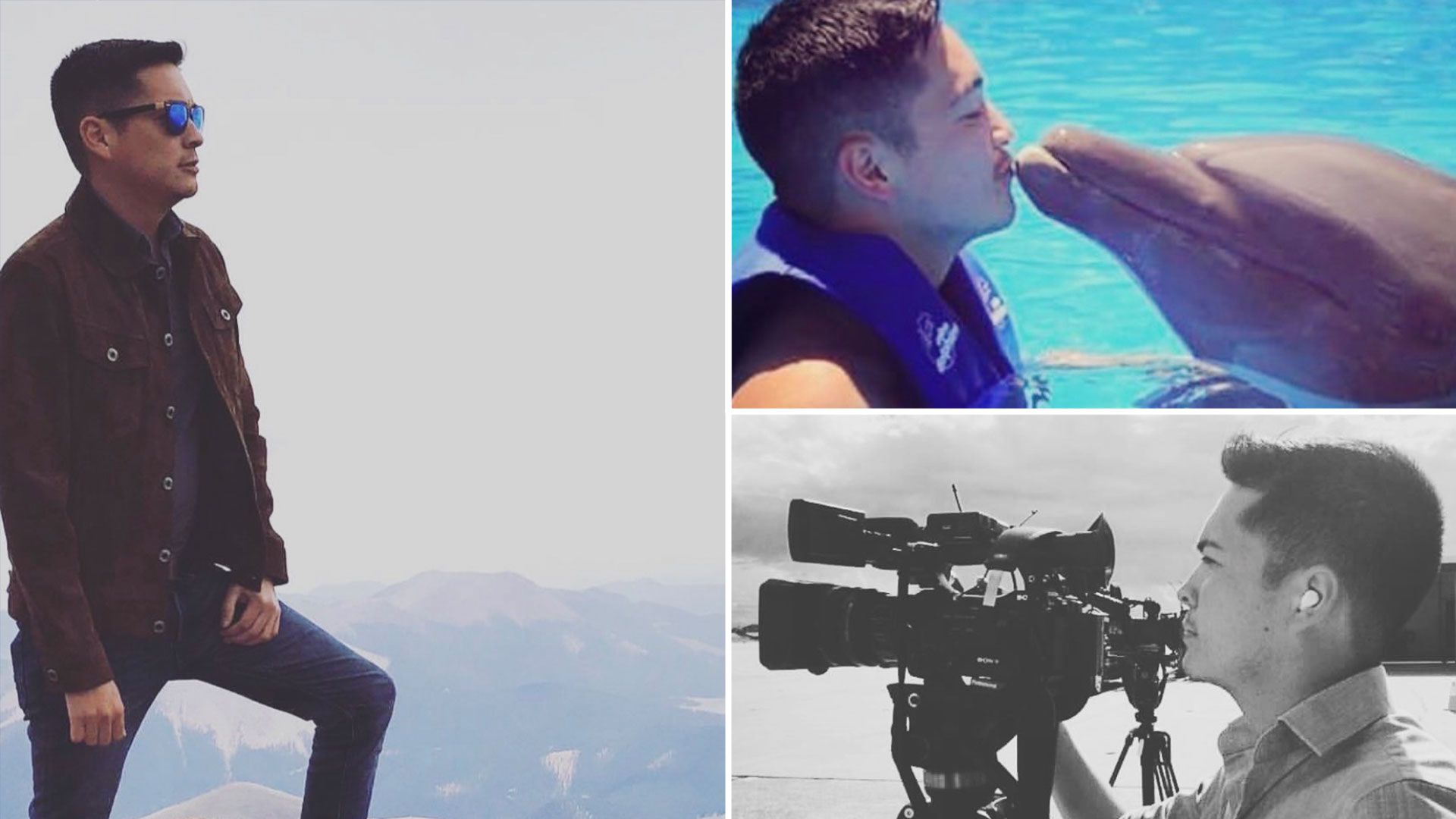
If you’re a KSAT viewer then you likely already recognize Steven Cavazos, but as he transitions into a new role as the KSAT morning traffic guru, it’s time to get to know him a little better.

From the night shift to morning reporting, Cavazos has covered both ends of the TV news schedule, and now he’s changing lanes to cover traffic. Here’s a little bit of background on the guy you’ll start getting your trusted traffic updates from on weekday mornings.

How long have you been at KSAT and how has your role changed since you started?

I’ve been working at KSAT for almost two years. I started as an MMJ (multi-media journalist) on our Nightbeat newscast. The bulk of my job was to enterprise stories important to the community. In addition, I would often shoot, write and edit. I traded late nights for early mornings at the start of this year when I moved over to GMSA as a live reporter. Most recently I switched lanes into a new role as GMSA’s traffic anchor. It’s been a lot of moving around here at KSAT but I’ve never been happier!

What are you most excited about in your new position as traffic anchor?

I’m excited to get needed information to our viewers before they get going – whether there are issues on the road or if things look good. Commuting is part of our daily lives. However, I still think teleportation powers would be awesome and convenient.

What time are you going to have to start setting your alarm?

I’m usually in bed by 6 p.m. and I try to be up at 1 a.m to go to the gym… the keyword there is “try.” Trying counts.

When can we expect to see you on the traffic beat?

I’ll be hanging with Mark, Stephanie and Mike on weekday mornings from 4:30 -7 a.m.

Where did you work before KSAT?

I worked as an MSJ (multi-skilled journalist) for the ABC affiliate in Corpus Christi for three years. I still have a lot of love for the community and it was a great introduction to this business.

How did you get your start in the news business?

Back in 2015 a few of my college classmates and I toured a station in the Rio Grande Valley. There was a production job opening and I immediately jumped at the opportunity. I spent my weekends rolling teleprompter for on-air talent and moving cameras around but I was never afraid to try new things. That’s how you grow and that’s the best advice I would give anyone curious about the news business.

What’s a story that you’ve covered that you’re particularly proud of and why?

During the horrific winter storm, many people were on the hunt for gas. My photographer and I met a few people who were lucky enough to find gas at one location. Unfortunately, one elderly man was almost on empty and realized he had forgotten his wallet at home. The man in front of him offered to pay for his gas so he didn’t have to worry. I was glad we were able to be there to capture that moment. I’ve covered crime and disaster but it’s heartwarming moments that make the job and this community so special. (You can read that story here.)

What are some things you like to do around San Antonio?

I’m big on nature and love to get out and explore some of our parks. Supporting local businesses is also important to me especially coming out of a year like 2020. Overall, San Antonio is a fun place to explore.

Favorite place to travel or bucket list destination?

My favorite place to travel to is Cabo! I love Mexico! Bucket list destination – New Zealand – home of Middle Earth!

What’s an embarrassing on-air moment you’ve had?

I was interviewing a man on live tv when a bird decided to drop some luck on my new blazer.

Do you have any hidden talents?

I have to say I am a pretty decent cook in the kitchen. My shrimp tacos are a favorite with my friends and family.

Tell us anything:

I am a lover of all animals but I’ve never met a cat I didn’t instantly love. (The cat pictured with me below is my 15-year old cat, Elizabeth Taylor.)

I’m also a big sci-fi enthusiast. My dad got me into it at an early age. Star Wars, Godzilla, Aliens. I can go on and on.

Finally, I try to meditate every day. I believe having a moment of silence at some point in the day is so important for our overall well-being.

If you’re also a fan of Samuel King who has been steering the traffic coverage on GMSA since December, don’t worry — he’s still at KSAT, he’s just shifting into the evening commute. Samuel will be joining Ursula, Myra, and Steve on KSAT12 News at 5 p.m. and 6 p.m. reporting on transportation and mobility issues as well as anchoring traffic during those evening newscasts.

What’s changed in San Antonio a year after the George Floyd protests? KSAT Explains

It’s been more than a year since a disturbing video clip showing a Minneapolis police officer killing George Floyd sparked a national movement.

The days and weeks that followed Floyd’s death were filled with protests and marches. These demonstrations happened in communities across the country and across the globe

Here at home, the protests forced San Antonians to examine our own history of racism.

With time and an ultimate conviction of the police officer, the protest crowds thinned and eventually marches stopped. What remains are continued calls for an end to systemic racism and accountability from our law enforcement officers and policymakers.

But have the past 12 months brought about any change?

(Watch the full episode on demand in the video player above.)

SMART. IN-DEPTH. LOCAL: Click here for more episodes of KSAT Explains

A look back at how protests played out in San Antonio

It was the last weekend of May 2020 when San Antonio saw a massive protest similar to the ones happening across the country in the wake of George Floyd’s slaying. Thousands of marchers flooded downtown streets, holding signs reading “Black Lives Matter” and “No Justice, No Peace”.

After an afternoon of largely peaceful protests, and after many demonstrators had gone home, tension grew. Eventually, some flung rocks and fire extinguishers through storefront windows at Rivercenter Mall and a few scuffles broke out. Police fired tear gas and pepper and rubber bullets, according to SAPD Chief William McManus.

Watch the video below to hear KSAT reporters, photographers, producers and anchors describe how the protests played out a year ago:

KSAT Explains premiered just weeks after the protests in San Antonio. We dedicated our first episode to the conversations happening in the wake of George Floyd’s murder. Click here to watch KSAT Explains: Unrest in America.

Push for police accountability

Like others across the country, Oji Martin decided to take action after the death of George Floyd. Martin founded Fix SAPD last summer with two petition drives to repeal two local government codes — Chapter 143 and Chapter 174.

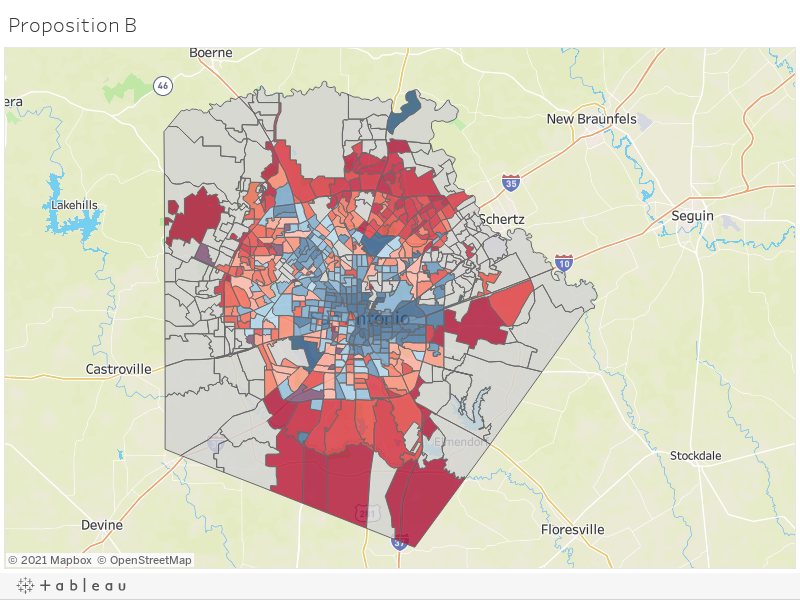
Ultimately, Fix SAPD only amassed enough signatures to put the proposed repeal of Chapter 174 on the ballot, or Prop B. Chapter 174 is the state law that gives the San Antonio Police Officers’ Association the right to collectively bargain for a contract. Prop B ultimately fell short of 3,745 votes, or a margin of less than 3 percentage points, and the collective bargaining rights of police here remained.

View the map below to see where Prop B drew the most support, opposition.

Even though Prop B didn’t pass, the close final vote was seen as a step in the right direction to those in favor of police reform.

“I think the whole pursuit of Prop B showed that a lot of people in this city, even those who voted against Prop B, want to see change,” said Carey Latimore, Ph.D., an associate professor of history at Trinity University.

Martin wasn’t the only San Antonian to push for police reform. You may also recognize local activist Pharaoh Clark. Clark was on the steps of City Hall protesting last summer, when Mayor Ron Nirenberg vowed to create change and to start having difficult conversations.

San Antonio Mayor @Ron_Nirenberg to protesters: ‘We want an end to systemic prejudice. There are people who will make mistakes, people on my side who make mistakes. Hold me accountable because I’m the mayor of this God damn city and we’re going to make change together. #KSATnews pic.twitter.com/4YgBgvsY71

— RJ Marquez (@KSATRJ) June 4, 2020

“I think that he was very genuine when he looked at me and said that he wanted to help,” Clark said.

Clark views that moment as pivotal to the city. A moment when city leaders stopped playing a neutral role, and said they wanted police accountability and transparency as well.

The mayor started meeting with Clark and other community members who were ready to address police reform and racial inequities. That group became the San Antonio Coalition for Police Accountability.

“It’s a group of a bunch of different organizations and like-minded individuals,” Clark said. “We come together and meet with officials. We find out where the problems are, and we try to come up with the solutions.”

Some residents and activists, including Clark, called on the city to cut the San Antonio Police Department’s budget and move that funding to other departments. Instead, the department’s general fund budget increased more than $7 million. The city said the increase was largely due to a scheduled 5 percent pay increase for officers.

City Manager Erik Walsh did demand a review of the city’s policing model as part of the budget. Virtual community meetings labeled SAPD & Me started in 2021, as a way to encourage people to get involved in the conversation about police reform.

San Antonio was one of the only major Texas city without a policy on police body-worn camera footage until December 2020.

SAPD’s policy states that videos and 911 recordings must be released within 60 days of incidents in which officers shoot and kill someone, or use force that results in a person’s death, with a few exceptions. One of those exceptions: videos related to domestic violence. The policy states those videos would only be released if Police Chief William McManus determined they serve a law enforcement purpose.

“I do think that we need to find a way that people have access to those body cams,” Carey said. “But we also have to recognize sometimes those things don’t tell us everything that we need to know.”

Since the start of 2021, San Antonio police have shot and killed six people. As of the end of May, SAPD had not released a single video clip from any of these confrontations.

Declaring racism a public health crisis

In August of 2020, the San Antonio City declared racism a public health crisis.

That declaration was both an acknowledgment that some people face greater health challenges because of their race or where they were born, and a call to action for the city to lessen those challenges and create greater health equity.

But in the last nine months, we’ve seen little action as a result of that declaration — a point of criticism for some San Antonio residents.

Glo Armmer, who writes contracts by day and poetry by night, is looking for more from the city’s declaration.

“I don’t know what we were expecting, but you want something substantial,” Armmer said.

San Antonio Metro Health says it is doing something. But first the department had to do some investigating to better understand local problems and how to fix them.

Assistant Director of Community Health and Safety Jennifer Herriot said that Metro Health made sure to look at the city’s problems from a racial, ethnic and income perspective.

“We’re not that surprised by what we found, and that is that we really need to be continuing to focus our work on the west, south and east sides of town,” Herriot said.

It’s not just the data. Metro Health has also been taking a closer look at itself — scrutinizing its workforce when it comes to training and diversity, trying to make sure the people crafting solutions to race-related health disparities are representative of the communities they’re trying to serve.

“In our advisory board that we have in our programs, we are going to bring representation from the marginalized communities,” said Carlos Rodriguez, Manager for Metro Health’s Office of Health Equity. “Not only from stakeholders that work with the communities, but also people that belong to those communities.”

The problem areas Metro Health wants to address range from lack of nutrition to domestic violence, which the health agency found happens at a higher rate in marginalized communities. The team at Metro Health has developed a set of 14 strategies for targeting five areas of health-related challenges. Herriot and Rodriguez tell us the finishing touches are being put on those plans, but they’re not ready to be released.

Even without seeing the plans, we know money is key to making it happen. Rodriguez said Metro Health is accounting for that, and metrics to show whether change is actually happening.

Watch episode 15 of KSAT Explains below. Why San Antonio has declared racism a public health crisis:

Start of “racial reckoning”

The summer of 2020 was a moment that many people referred to as the start of a racial reckoning across the country. But where will this reckoning lead and what will be the long-term impact?

There is hope that real change is on the horizon and that this will be a major milestone in future history books.

“Change doesn’t happen overnight. It’s sometimes a slow, evolving process and I think that there is a process of change in which the pieces are being put into place,” said Latimore.

Derek Chauvin’s conviction may have been a sign of those wheels in motion.

“We’ve been hoping that we would be heard and so it did my heart good to see that finally somebody was being held accountable,” said Armmer.

In the process, last year’s protests brought different communities and people from all different backgrounds together.

“We might be able to identify with somebody through an experience, maybe we were profiled,” said Latimore. “That experience can link us on an emotional level.”

The past year has also had an effect on how we discuss race in our country. These conversations can be uncomfortable but connect all of us.

“There’s a sense of unfortunate gratitude and it bringing us here today. Being able to have these conversations that we’ve had and just to see where America is, and how people really feel when it comes to talks of humanity,” said San Antonio activist Valerie Reiffert.

“I think we have a history of racism in our nation. It doesn’t mean that has to be our future,” said Latimore. “But we have a history in which race has had an impact on people’s ability to build wealth, had an impact on people’s ability to live to experience the American dream.”

Watch the video below for more on how last summer’s protests affected the way the media, including KSAT, discuss race and policing in newsrooms, and how the COVID-19 pandemic put a spotlight on existing inequities — from education to transportation — in San Antonio and across the country.

Things to do in and around San Antonio each month, a free newsletter you didn’t know you needed

Hey everyone, Mary Claire here. You don’t know me from TV but if you follow KSAT online then you’ve likely read some of my articles. I often write about things to do in and around San Antonio.

One of my favorite things about our South-Central Texas location is that it is prime for festivals and unique events. From the Fredericksburg Peach Festival and the Poteet Strawberry fest to San Antonio’s Fiesta and a unique celebration of sausage and beer (Wurstfest, anyone?), there’s something within driving distance happening nearly every weekend.

On top of the revolving door of local events, there are also many gems — hidden and otherwise — in our Hill Country community. Have you ever visited Bracken Cave, home to the world’s largest bat colony? It’s just minutes outside of San Antonio. Or Jacob’s Well in Wimberley? Or maybe you’ve considered living out your childhood dreams by renting out a Texas treehouse?

But to get in on the fun, you have to know when and where it is. That’s why we’re launching a free Things To Do Newsletter from KSAT.com. >>Sign up here<<

Starting this month, I will pop into subscribers’ email inbox every few weeks with a specially curated list of upcoming events and things to do for the month. Don’t worry if you’re looking to avoid crowds, many events featured in the newsletter are geared towards people looking to stay socially distant. Many are family-friendly and free!

I’ll send a list at the beginning of the month on what’s happening in our area (and sometimes statewide because, let’s face it, Texas has a lot going on.) I’ll also send an update around the middle of the month that will focus on a different, seasonal topic: from pet-friendly patios to where to see Christmas lights.

What you can expect to get from KSAT’s Things To Do Newsletter

Learn about events happening around San Antonio and the surrounding areasSee what’s been trending on KSAT.comGet details on major entertainment announcementsSeasonal listicles highlighting the best of the best around our community

I’m inviting you to subscribe as we launch this free newsletter, but you don’t always need to wait for my email to hit your inbox. If you’re looking for things to do around town right now, we have an entire section on the KSAT website dedicated to that – check it out here.

Thank you for joining me. If you’ve got suggestions on improvements to the newsletter or upcoming events you think people want to know about, send them my way at mpatton@ksat.com.

>>Sign up for the free Things To Do Newsletter from KSAT 12 here<<

This island paradise is just 30 minutes outside San Antonio

Son’s Island is a little piece of Texas paradise located just 30 minutes outside San Antonio in Seguin.

Visitors to Son’s Island can rent cabanas for the day or for the evening and there are also options for overnight “glamping” tents.

Cabana rental prices vary but swimming, fishing, beach volleyball, boat docking, a water slide, cornhole and barbecuing are all included in the rental price.

Kayaks, paddleboards and giant floats are all available to rent, however, guests are also welcome to bring their own kayaks, boats, jet skis and floats.

Son’s Island was set to close in 2019 after the Guadalupe-Blanco River Authority said Lake McQueeney, Lake Placid, Meadow Lake and Lake Gonzales needed to be drained due to safety concerns over aging dams. However, a judge put a temporary halt to the draining of the four lakes in September 2019 to hear arguments from lawyers representing residents who live along the lakes in addition to GBRA lawyers.

Reservations are required to visit the island and availability for certain cabanas has already filled up for the majority of the summer. Costs run an average of $99-$245 per day depending on the cabana and include entry for up to 8 people. Click here to check availability.

Daytime cabana rentals are 10:30 a.m. – 6:30 p.m. and evening rentals are 7:30 – 10:30 p.m. For a list of frequently asked questions, click here.

There are also barbecue pits and bathrooms on site for visitors to use while they’re on the island.

Click here for more information about Son’s Island, located at 110 Lee Street in Seguin.

Why does it hail so often in the San Antonio area? KSAT Explains

Few things in life are certain. But when it comes to San Antonio in the spring — there’s a good chance you’re going to see some hail.

If you’ve lived in South Central Texas for a while, you’re probably no stranger to hail. There was a significant hailstorm just last week. But there’s a lot about the science of these weather events that you may not know. (Watch the full episode in the video player above.)

SMART. IN-DEPTH. LOCAL: Click here for more episodes of KSAT Explains

History of hail

Feel like hail is something you have to deal with every year? It’s not your imagination.

Over the past 10 years there have been at least 16 large hail events in and around the San Antonio area, according to the National Weather Service.

One of the reasons we have very large hail in South Central Texas is because of our proximity to the West Texas dry line.

Take, for example, the hailstorm that hit the San Antonio area in early May. Temperatures were so hot behind the dry line in Cotulla in the afternoon that they fired off a few showers. These showers then moved into warm, humid air closer to San Antonio and exploded into thunderstorms. One thunderstorm tracked right over San Antonio as it was strengthening and moved across the central parts of the county.

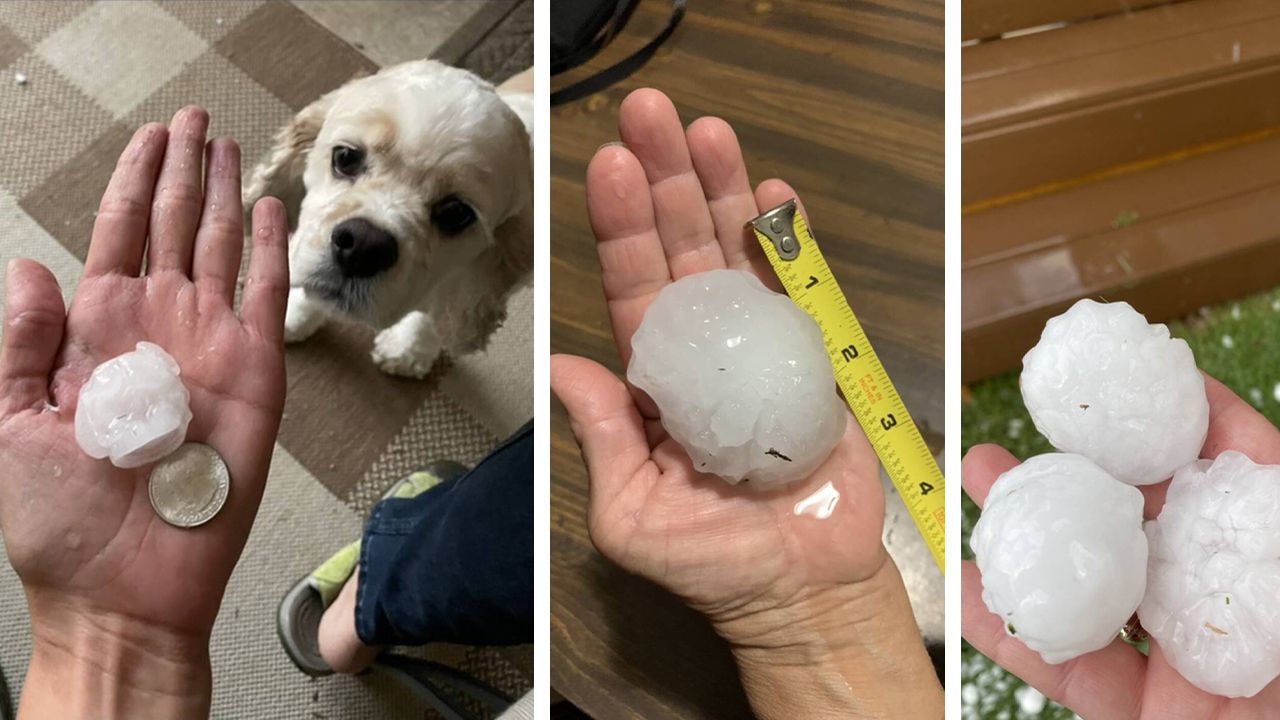
And many remember the very destructive hailstorm of April 12, 2016. A very large hailstorm moved across Bexar County just north of downtown that evening. Tennis ball-sized hail fell in a swath from the Government Canyon area to the San Antonio International Airport, and east through Saint Hedwig.

Some of the largest hailstones that were up to softball size fell near Helotes and Leon Valley, and east in Alamo Heights and Kirby.

This one event resulted in $1.36 billion in damage, making it the second costliest hailstorm in Texas history. Another storm with large hail would hit San Antonio just two weeks later.

How does hail form?

To have hail, your first have to have a thunderstorm. Thunderstorms, especially large and organized ones called supercells, have updrafts and downdrafts. These are areas of fast-moving wind going up into the storm and then down onto the ground.

The updraft transports raindrops to the very top of the storm where the raindrops freeze because it’s so cold. This is the very beginning of a hailstone.

It goes without saying that the bigger the hail, the worse the damage will be. But what makes some hailstones so big?

Once a hailstone forms, it goes on a bit of a wild ride. Those updrafts and downdrafts in a thunderstorm carry the hail up and down, up and down. Each trip adds another layer to the hailstone as it bumps into supercooled water droplets, making it a little bit bigger each time around.

Eventually, the hailstone becomes too heavy and falls out of the storm. A strong storm can support or carry larger hail. On the flip side, a weak thunderstorm will produce smaller hail — sometimes as small as green beans.

Watch the video below from the KSAT Weather Authority team to see how hail forms:

According to the National Weather Service, the largest hailstone ever recorded in the United States fell in South Dakota in 2010. It was eight inches in diameter and weighed nearly two pounds.

As you can see above, that hailstone almost looks like it’s made of a lot of smaller stones. It’s also got some appendages. So, what causes that?

Hailstones can have different shapes based on their journey through a storm. Some perfectly round hailstones will have rings — just as trees have rings. Each ring represents a trip back up to the top of the storm.

Sometimes hail can look jagged with appendages. These stones likely started to melt on their way down a storm, and then refroze as a storm’s draft carried it back up to the top.

Finally, some stones look a little bumpy. This is a result of smaller stones bumping into one another to form one larger hailstone.

Hailstorm safety

Hail is very common in any thunderstorm, but large hail is rarer. Hailstones can range in size from a quarter of an inch to over four inches in diameter.

Pea- and penny-size hail can be noisy, but is unlikely to cause a lot of damage. However, once hailstones get to the size of quarters or larger, significant damage can occur. Hail the size of tennis balls and larger can cause catastrophic damage and injury.

Because of this, severe thunderstorm warnings are issued for storms with the potential to create quarter-size hail or larger.

So what should you do if you find yourself under a severe thunderstorm warning for hail?

If you’re in your home, stay inside until the hail stops. Don’t go outside even to cover your car — it’s too late for that if it’s already hailing.

It’s also important to stay away from all windows, including skylights. Large hail can break glass.

If you are in a car during a hailstorm, try to find a safe place to pull over — like under a gas station awning. However, it’s important to remember never to park under a highway overpass. This could lead to car accidents. Next, turn your back to the car windows and don’t leave the car until the hail stops.

Finally, if you sustain damage to your home or other property, be sure to document the time the hail occurred and the size of the hail. This is necessary for insurance purposes.

Click here for some tips about what to do if your property has been damaged by hail.

Past weather-related episodes of KSAT Explains:

KSAT Explains: The Science and Impact of Climate ChangeKSAT Explains: Western Wildfires and an Active Hurricane SeasonKSAT Explains: The Texas Power Grid Failure

MAP: Current power outages in Bexar County

For the latest updates on outages, click here or view the map below. More on the forecast here.

Click here to see reported outages across the state of Texas.

Stay Informed

As always, Your Weather Authority team will keep you updated. You can get the very latest forecast and check out the interactive radar anytime by bookmarking our weather page and downloading the KSAT Weather Authority App – available for both Apple and Android devices.

To keep up with the weather situation, please download the KSAT Weather Authority app for Apple or Android and allow notifications for updates, including livestreams from KSAT meteorologists.

Want to share what you’re seeing with KSAT12′s meteorologists? Submit photos and videos here, and your submission may get featured on KSAT.com or on air.

More resources:

Map: Emergency road closures at low water crossings in San Antonio, Bexar CountyCurrent power outages in Bexar County, tips for residents with energy outages from CPSAvoid these notorious roadways prone to flooding during heavy rain in San AntonioFind the latest forecasts and alerts on our weather pageLive doppler radar