Why is redistricting political and what will the process look like in Texas? KSAT Explains

UPDATE: Texas will gain two congressional seats due to results from the 2020 census. This means for the next decade Texas will have 38 members (and votes) in the U.S. House of Representatives. Redistricting, the process of redrawing political boundaries for congressional and state legislative seats, is on the to-do list when the Texas Legislature convenes for a special session later this year.

Original story:

Redistricting is a complicated process that helps define the political landscape. The once-a-decade process is happening again this year.

The Texas Legislature will take up the task of redrawing the lines on our state’s congressional and legislative maps when they receive the results from the 2020 census.

SMART. IN-DEPTH. LOCAL: Click here for more episodes of KSAT Explains

These maps have repeatedly been challenged over the decades because of allegations of giving unfair advantages to certain political parties or voting groups.

In this episode of KSAT Explains, we examine how this process has become so contentious and dive into why this year’s process is expected to be different. (Watch the full episode in the video player above.)

What is redistricting

Redistricting is done every 10 years after new U.S. census figures are released. The entire process relies heavily on a state’s population and is vital to our representation in Washington, D.C.

“Redistricting has to do with the boundaries that are drawn for our election districts, so anything that we elect by district. It could be state representative, state senate, Congress, school board, city council,” said Nina Perales, VP of Litigation at Mexican American Legal Defense and Educational Fund. “All of those districts get redrawn every 10 years after the census to make sure that there are roughly the same number of people from district to district.”

The census also determines how many congressional seats each state receives. It’s no surprise that Texas is expected to gain more seats as the population booms in the state.

“Some states that are not growing as fast as others are going to lose congressional seats and Texas is going to be the largest gainer,” said UTSA Assoc. Professor of political science Walter Wilson, Ph.D. “We’re going to get three new congressional seats by most projections, going from 36 to 39.”

Census numbers need to be finalized before maps can be redrawn and the COVID-19 pandemic has delayed those figures significantly, but the U.S. Census Bureau estimates Texas added more than 4 million more residents over the past decade, more than any other state.

We explain more of the redistricting process in the video below.

History of gerrymandering and how it works

Newly drawn maps can go through years of lawsuits and legal challenges.

One of the primary reasons the map-making process has become so contentious is because of a controversial tactic called gerrymandering.

For decades, political parties in power have drawn district lines to favor their parties. The same can be expected when Texas state legislators draw the next set of maps. It’s why these maps are often designed in different shapes and sizes.

With more demographic information available, the line-drawing has become more methodical.

“Gerrymandering is a term that people came up with to describe when district lines are drawn in a way that somebody considers to be unfair,” said Perales.

The term historically comes from Massachusetts Gov. Elbridge Gerry, an 18th and 19th century politician and diplomat.

Gerry was a signer of the Declaration of Independence and the fifth vice president of the United States. But he is perhaps best known for signing an infamous redistricting bill.

Gerry belonged to the Democratic Republicans, the party that controlled Massachusetts’ state legislature at the time. Lawmakers drew the state’s senate districts to benefit the party.

During that time period, districts followed county boundaries to draw the lines, according to the Smithsonian.

This new senate map was filled with random shapes and it drew opposition from the Federalist Party, but Gerry signed the redistricting bill in February of 1812.

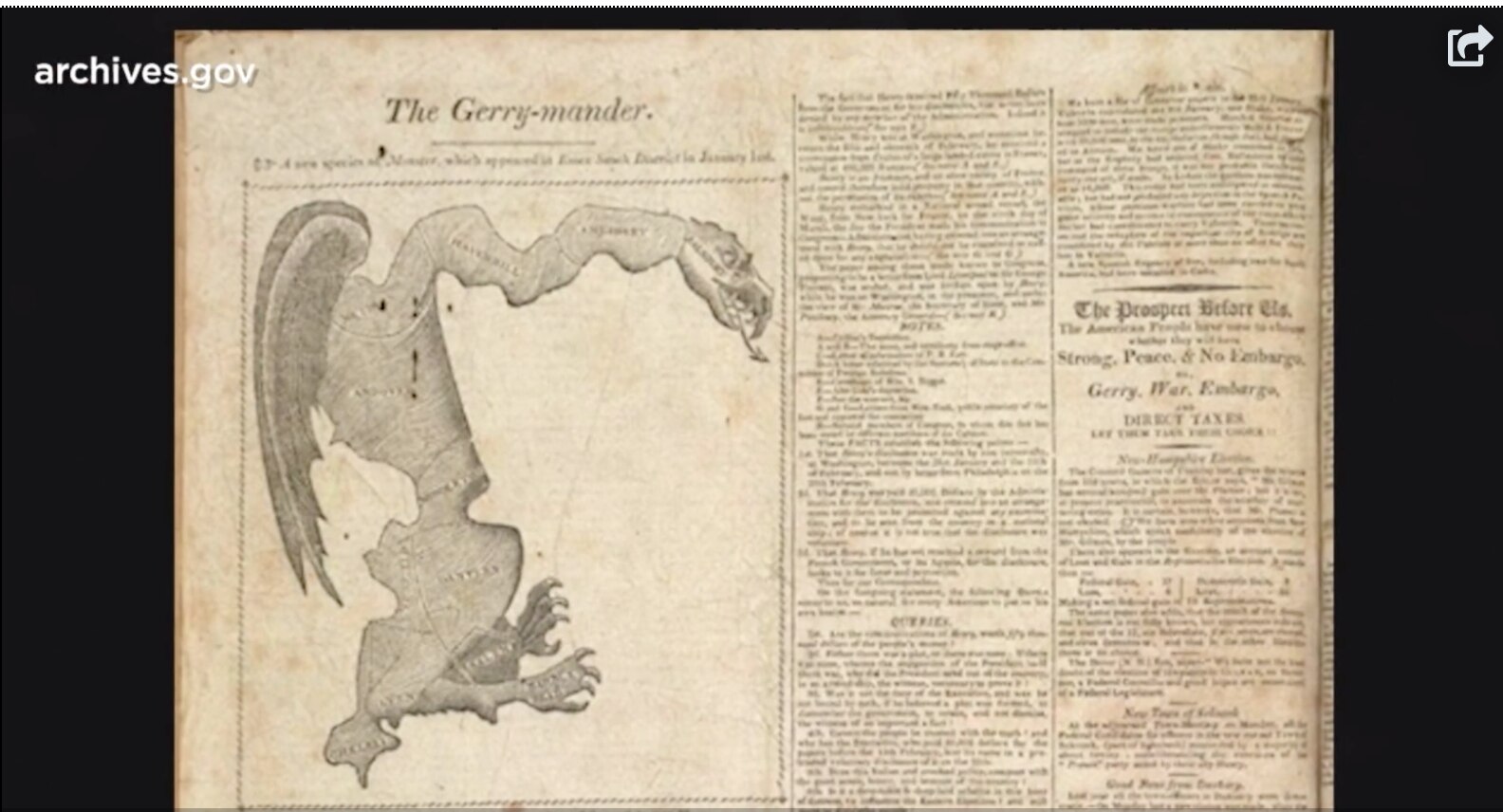
A satirical cartoon featured in the Boston Gazette depicted the districts into a mystical-looking animal which was dubbed “The Gerrymander” and the term stuck over centuries.

How exactly is a district drawn unfairly and how does gerrymandering work? We demonstrate the process using Tetris in the video below.

Preclearance protections lost

For nearly five decades after the passage of the Voting Rights Act in 1965, Texas was one of a handful of states that was covered by what’s called preclearance.

“Preclearance is a very powerful piece of legislation that said that states like Texas and other states that have histories of racial discrimination basically have to get the permission of the federal government before any changes can be made to election laws,” said Scott Braddock, Editor of QuorumReport.com.

Texas has has a deep history of voter suppression through the redistricting process. With preclearance in place, there were safeguards against lawmakers drawing maps that would suppress or disenfranchise Latino and Black voters across the state, and yet, it did not stop lawmakers from trying.

Texas has not made it through a single decade — since preclearance has been required — without a federal court ruling saying it violated federal laws.

That was the case again in 2011. Those maps were immediately challenged by voting rights groups who claimed several districts with Latino and Black voters were racially gerrymandered. What followed was a decade-long legal battle.

Civil rights experts say one reason Texas lawmakers have racially gerrymandered is to dilute the impact of the booming Latino population in Texas.

“Since Texas started redistricting in the 1970s, in every single round, the courts or the Justice Department have found that Texas discriminated against Latino voters,” said Perales. “That’s primarily because in Texas, Latino voters have been a growing population and Texas has had some hesitancy about creating districts to reflect that growth fairly. But it could also be another racial group that experiences discrimination and redistricting like African-Americans or Asian-Americans, which we had examples of discrimination there in the last redistricting round, as well as Latinos.”

The landscape of Texas redistricting is expected to shift dramatically this year because of a landmark U.S. Supreme Court decision in 2013 that struck down preclearance protections.

This means that for the first time since 1965, Texas lawmakers will not have to get federal approval to draw the boundaries. It’s already setting up to be another years-long fight in the courts.

“To not have those protections on the front end means that those Democrats in the legislature and those representing minority communities in the legislature, which, of course will be disproportionately Democrats, they have to do their due diligence on the front end in the legislative process,” said Braddock. “They can’t depend on Washington anymore on the front end of this.”

The video below breaks down more of what’s expected after the loss of preclearance protections and another court decision that is expected to have a significant impact on Texas redistricting.

For more information on how you can participate in the state’s public input sessions, click here.


Do you know about San Antonio’s hidden black history? KSAT Explains

San Antonio is a city steeped in history. From the Missions to the Majestic Theater, Samuel Maverick to Henry Cisneros, there are countless stories of people, places and events that have helped bring us to where we are today.

SMART. IN-DEPTH. LOCAL: Click here for more episodes of KSAT Explains

But for decades, much of our city’s Black history has not been told. In this episode of KSAT Explains, we look at why those elements of our city’s past are so important — no matter your background — and how it could influence the future.

(Watch the full episode in the video player above. Check out our podcast on why we chose to expand on this topic below.)

Hidden in plain sight

It’s no secret that for decades, the success of the city’s Black leaders and historical figures have not been taught properly in schools.

We are all familiar with Dr. Martin Luther King Jr., Rosa Parks and the basics of the Civil Rights movement of the 1960s, but there is a treasure trove of little known Black history in San Antonio.

“If you’re not teaching the importance of African-American contributions, Hispanic contributions, women contributions to the general audience of public school students and university students, then you’re not giving them a range of dignity that should be afforded to all of humanity,” said Mario Marcel Salas, local historian and former UTSA political science professor and city councilman.

From the arrival of the Canary Islanders in what is now San Antonio, to the woman who helped establish a historically Black college on the East Side, the success stories are hidden in plain sight.

We take a closer look at these stories and how the Black community consistently played crucial roles in local and state history.

Representation matters

There are efforts being made statewide to unearth more of the Black history that helped shape Texas and the Alamo City.

Tuesdae Knight, President and CEO of San Antonio for Growth on the East Side or SAGE, points to the importance of having representation when discussing Black history.

“A lot of the mainstream media, a lot of movies, art, no matter what it can be, you often don’t see yourself portrayed in those,” Knight said.

The San Antonio African-American Community Archive and Museum, or SAACAM, is working to change that in our city.

“We have to be mindful of the fact that this country is made up of many different ethnicities. And the country is great because of the contributions of so many different types of people,” said Kenneth Stewart, SAACAM archivist.

We look at why this effort is not just for Black San Antonians, but important for our entire community.

How East Side became home to San Antonio’s Black community

The East Side’s history dates back centuries. Historians say that in the 1700s, nearly a third of the first Spanish settlers from the Canary Islands were Black. But they were not treated as equals in the eyes of the Spaniards, and they were separated by racial lineage.

“The San Antonio River was the first line of segregation in the history of San Antonio,” said Salas. “If you are dark-skinned, you are Native American, you are dark-skinned Mexican, you had to live on the eastern side of the river.”

During Reconstruction in the 1860s, segregation forced many Black San Antonians to create their own communities. Many historic East Side churches also became safe havens as racial tensions in the south were high.

“After slavery is over and you look for leaders it’s the church that becomes that space that can bring people together,” said Dr. Carey Latimore, Assoc. Professor of History at Trinity University. “And so many of the leaders, the first political leaders were were ministers or deacons because these are people that have the ability to read, people who had the ability to write. They were literate. They were in a position where they had the authority to speak.”

The 1920s to the 1960s was a pivotal era in the evolution of the East Side, from the founding of San Antonio’s NAACP chapter, to the birth of many leaders in the Black community. We examine this time period and it’s place in San Antonio’s history.

The Black Lives Matter movement in context of history

When it comes to Black history, we are living in a moment right now that history will likely remember.

The Black Lives Matter movement has been around for years, but a nationwide spotlight was placed on the push for equality last summer after George Floyd, Breonna Taylor and a series of incidents in which Black people were killed by law enforcement.

There have been marches and protests, but when we look back at this moment years from now, what role will could it play in the larger civil rights story?

KSAT Explains: Future of pro sports in San Antonio from NFL to Spurs

Editor’s note: The Dec. 14 KSAT Explains livestream features portions of a previously aired episode. You can watch it live at 7 p.m. in the video player above. After Tuesday night’s livestream, you will be able to watch the original version on demand.

When you think of San Antonio sports, you no doubt think of the Spurs. With five NBA championships and decades of competitive basketball, the Spurs have had success many other NBA cities envy.

But for years city leaders have tried to attract another successful major professional sports team to San Antonio with little to no luck.

SMART. IN-DEPTH. LOCAL: Click here for more episodes of KSAT Explains

San Antonio is the seventh most populous city in the U.S. and growing every year, so why can’t the city attract another major franchise?

That is the topic of this week’s episode of KSAT Explains. We dive into San Antonio’s history with professional sports, its future and the debate over using public funding to build new stadiums or arenas for pro sports franchises.

(Watch the full episode in the video player above. Check out our podcast taking you behind the scenes of this episode below.)

San Antonio’s pro sports history

Every few years, there is talk about the possibility of getting another major professional sports team to come to San Antonio. But whether it’s the NFL, Major League Soccer or Major League Baseball, our city has simply struck out.

Our city is filled with dashed hopes and near misses, including nearly a dozen failed football franchises in San Antonio’s history.

In the mid 1980s, the Gunslingers offered some hope, but the USFL folded.

“They had the right approach. They had a cap on salaries. They had a TV contract with ESPN, which was a startup company back then,” said KSAT Sports Director Greg Simmons. “What could possibly go wrong? Then Donald Trump paid Herschel Walker a $5 million dollar personal services contract to get around the cap. And soon after that, the Los Angeles Express paid Steve Young a $41 million contract and the league’s wheels just started to wobble and eventually fell off.”

In the mid 2000s, the city showcased itself to the NFL when the New Orleans Saints were forced to relocate after Hurricane Katrina.

Despite near sellout crowds, an NFL team never relocated to San Antonio and the city has been used as a pawn or leverage ever since to get stadiums built in other cities.

“When the Saints were here, they were playing as a New Orleans Saints, but it was San Antonio fans packing the Alamodome and you could feel it,” said Simmons. “It was like a college atmosphere. That’s how much they wanted it here.”

Mayor Ron Nirenberg still feels San Antonio is positioned to get an NFL franchise in the future.

“I said last year or the year before, I think San Antonio was an NFL city within 10 years and I still stand by that,” said Nirenberg. “That is because of the evolution that’s happening within the National Football League, the fact that it too is becoming an international league, particularly with its sights on Latin America.”

The latest misstep with pro football was the San Antonio Commanders. The Alliance of American Football folded in less than a season, but fans supported the team.

“I think we’re sold short, not by anybody here. The people that run this city, that are the movers and shakers so to speak, they know the potential this city has,” said Simmons. “But there is still that part out there that say the Alamo is covered by dust roads around it and that sort of thing. And they don’t realize what a modern city this has become.”

We take a closer look at San Antonio’s pro sports history below.

Future of pro sports in San Antonio

How well positioned is San Antonio to get another professional sports team? There are several factors at play. It’s much more than whether there are enough fans to go to the games.

It’s the companies located here, the kinds of jobs in San Antonio and income levels. Then there is the question of the pro teams that already exist in Texas and whether they stand in San Antonio’s way.

Bexar County Commissioner Tommy Calvert believes more needs to be done to help existing local businesses thrive.

“We don’t do enough to help our mid-sized businesses go from a million dollars to $10 million in revenue or a $10 million company to a $100 million company,” Calvert said. “Those are the folks who buy the corporate box seats. That’s really the gravy.”

Nirenberg and Calvert both feel San Antonio’s work force needs to be improved.

“One of the reasons why I’m very optimistic about the pro sports future for San Antonio is that we are doing it the right way. We are investing in the people of San Antonio and access to economic mobility,” said Nirenberg.

“We can’t just focus our our efforts just on the youth,” said Calvert. “We have to do something about where adults are in their literacy level and bring it up, and have them make higher wages after getting them reading and into job training programs.”

Watch more on the future of pro sports in the video below.

Do new stadiums spur economic development?

This has been an ongoing debate for cities across the country. Construction for the SBC Center, now the AT&T Center, was completed in 2002.

The new arena brought promise of new development on the East Side, but that has largely not been done.

“For decades, it has been assumed that if you plop a an arena down in the middle of an area, the area will blossom. And that’s simply not true unless you have the corresponding investments,” said Nirenberg.

A review by the Federal Reserve Bank of St. Louis found that most economists still oppose public subsidies for stadiums.

Here at home, Bexar County tax payers covered most of the $193 million in total construction costs for the AT&T Center while Spurs Sports and Entertainment covered $46.5 million, according to reporting by the San Antonio Express-News.

In 2014, Bexar County Commissioners Court approved $101.5 million to renovate the county-owned arena. The renovations included new seating, an expanded concession area and a new high-definition scoreboard.

The project was again largely funded by taxpayers. SSE contributed $16.5 million and agreed to cover any additional costs. The remaining $85 million was covered by the Bexar County Visitors Tax. The arena is also home to the San Antonio Stock Show and Rodeo and hosts concerts.

“You’re seeing a significant push back and the use of public resources for the building of stadiums, and that’s something that is on the minds of a lot of league owners,” said Nirenberg.

“Even if you take a completely depressed area where there’s virtually nothing going on at that part of town and you build this massive, beautiful stadium and then you build businesses around it or restaurants. There better be something other than the sports franchise bringing people to that area,” said UTSA economics professor Les Doss.

Nirenberg said San Antonio did not prioritize investments around the AT&T Center for years, but says in the past decade, the city has turned around on this.

“That’s where the Spurs have been very beneficial. We just launched an initiative last year with with Spurs give that is investing in park infrastructure, particularly around the East Side,” said Nirenberg.

But one major plan to invest on the East Side, the River East Project, has been slow going.

“Things like the museum and the missionaries, they took a decade of development and still try and get Congress deals to pay off the bills,” said Calvert.

And while Doss and many other economists say there aren’t financial benefits from publicly funding stadiums, it doesn’t mean it’s always a bad idea because it helps sell a city.

“You travel around the world and you say you’re from San Antonio. They only ask you two questions. Have you been to Alamodome and are you a Spurs fan,” Doss said.

We break down more of the pros and cons of stadium development below.

Future of the Spurs in San Antonio

The Spurs are part of the fabric of San Antonio and many fans have silver and black in their DNA.

But there have been some business decisions in recent years that have raised some concern about the franchise’s future in the Alamo City and the East Side.

Spurs Sports and Entertainment sold its WNBA franchise and then minor league hockey franchise, the Rampage.

In April, SSE also reportedly sold a minority stake in the franchise, but owner Peter J. Holt has continually said they are committed to San Antonio.

We break down the Spurs future in San Antonio and whether they would ever move out of the East Side to an arena further north.

San Antonio community leaders reflect on Martin Luther King Jr.’s legacy

Editor’s Note: This story was first published in 2021.

Martin Luther King Jr.’s tenacious fight for equality and civil rights forever changed our nation.

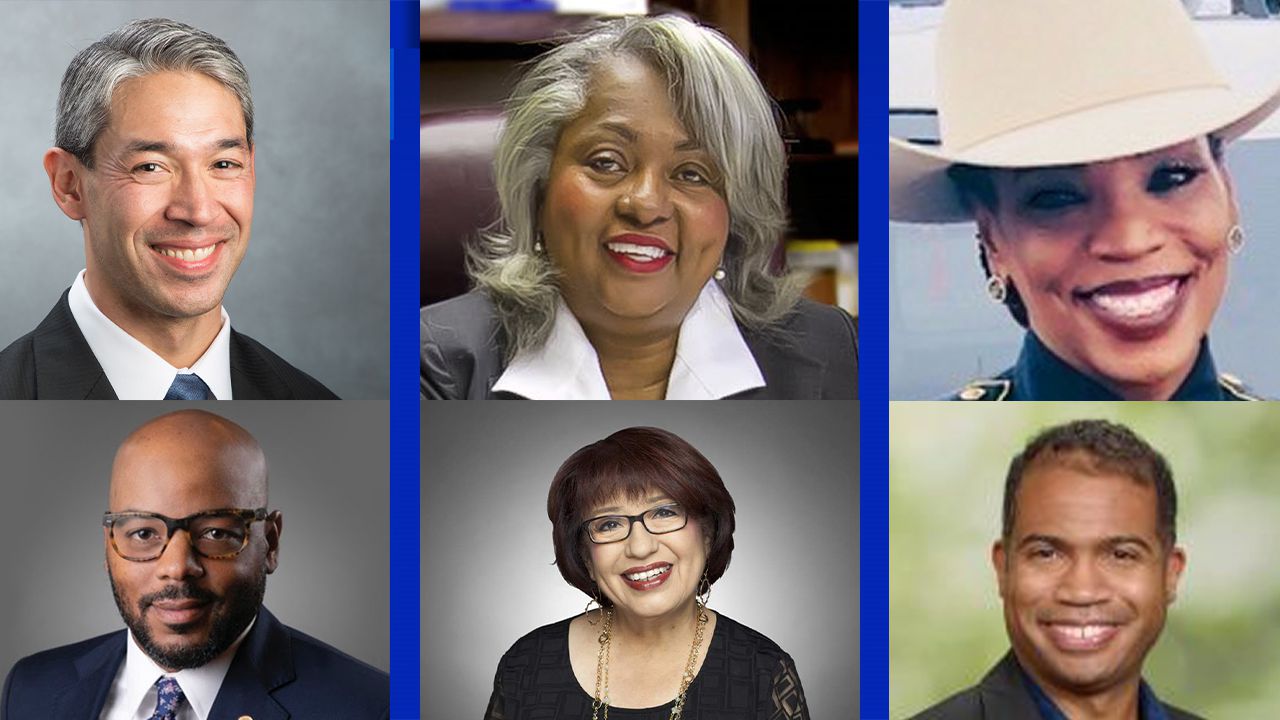
To celebrate and commemorate his life, we asked local leaders to share their reflections on Dr. King’s legacy and how it helped transform their lives.

Barbara Gervin-Hawkins

State Representative, District 120 (San Antonio)

“Dr. King’s memory serves as the conscious of America. Celebrating Martin Luther King Jr. Day is both a reflection of the dark past perpetrated on African Americans as well as hope for the future.

Dr. King’s dream of a fair and just society establishes the blueprint for America as we seek equity and justice for all. Dr. King’s legacy is epitomized by his power to keep the dream alive, understanding the value of peaceful protesting, artfully articulating the message, as well as his ability to promenade through the hearts of our society while keeping the faith for a better tomorrow.

My life has been directly impacted by Dr. King’s plight. As a living testament and direct receipt of his work, I was able to live where I wanted, sit and eat in a restaurant, go to college, obtain better jobs and serve as a State Legislator. Without Dr. King’s hard work and human sacrifice, my life would have been immensely different.

In this moment I’m also reminded of the many others who sacrificed and put their lives on the line during the Civil Rights Movement from the freedom riders, Medgar Evers, Malcolm X, Rosa Parks, John Lewis and many, many more.

Let us also remember the journey is still ongoing, and the justice we seek will only be achieved through the same principles and diligence as Dr. King. Let us emulate his greatness and take action in our own lives by staying civically and politically engaged with all levels of government. Personally, I plan on using my platform in the Texas Legislature to promote equality for all Texans in any manner available to me.”

Ron Nirenberg

Mayor of San Antonio

“Dr. Martin Luther King Jr. has been a great inspiration to many people across the world, and I am one of them.

Dr. King’s vision was that every person has a role in achieving a society that is equal and more just and that ‘the arc of the moral universe is long, but it bends bent toward justice.’

Let us all be people who through words and deeds strive to bend the arc toward justice. His vision and legacy are strongly embraced by our community as demonstrated by the size our annual MLK March, and his dream looms over the city’s work on equity, affordable housing and so much more.”

Dr. Carey H. Latimore IV

Associate Professor and Chair, Department of History @at Trinity University

“MLK’s legacy has impacted my life tremendously. As a professor, I appreciate his commitment to learning. He was a student of the world who believed that leadership requires study and engagement with the world.

King’s devotion to non-violence was not something that he just adopted. It was deeper than just a feeling. He came to it through rigorous study, analysis and contemplation.

As I think about my life, particularly as a person of faith, MLK’s embrace of the beloved community continues to inspire me. My faith informs me to ‘love my neighbor as myself.’ For me, that is the beloved community King spoke about. King’s life demonstrates the ways faith can be a powerful voice for reconciliation. Faith should also encourage us to speak on behalf of those who have little or no voice.

In a world so terribly divided, MLK’s life calls all of us, particularly people of faith, to be less judgmental and hateful. His life confirms the benefits of being more tolerant and considerate. MLK’s optimism shows us that if we work together we can help to heal the deep-seated wounds in our nation and world.”

Demonte Alexander

Director of External Affairs & Special Projects at Bexar Facts

“When I think of Dr. Martin Luther King Jr.’s legacy, I cannot help but think of the fear, anger, loneliness, and pain he must have felt during his fight for civil rights and social justice. Under immense pressure and threats on his life, he stood firm in his faith and remained determined and focused on his purpose in advocating for social justice and equality.

Today, our nation is just as divided and ideologically polarized as it was in the 1960s. We live in a time where falsehoods have replaced facts and cravings for power, and unchecked privileges overshadow our communities’ needs. Like King, we must continue to organize our communities and stay focused and firm in our resolve. We must continue to find purpose in our work and demand justice, equity and equality for all unapologetically.”

Jessie Degollado

KSAT12 reporter

“Growing up in Laredo in the 60s, although Latinos were the majority, I realized not all Mexican-Americans were treated fairly — having been an avid follower of the news, even as a teenager, and through accounts I’d heard from my parents.

I believed Martin Luther King Jr.’s fight for equality was for African Americans, certainly, but also, all minorities.

He opened my eyes to what was possible for me and so many others who were thought of as ‘lesser than’ because of the color of our skin.

Sadly, during my youth, there were three assassinations: John F. Kennedy, Martin Luther King Jr. and Robert F. Kennedy, all heroes of mine.

Yet it was Martin Luther King Jr. who inspired me the most. He gave me hope times were indeed changing for the better. Segregation would not stand, although the struggle to protect our civil rights goes on.”

Kathryn Brown

Bexar County Precinct 4 Constable

“Dr. Martin Luther King’s movement for racial equality created a platform for my race to be judged by the content of our character versus the pigmentation of our skin.

His crusade for justice enabled our very first, Bexar County African American Constable, Matthew Nite Marshall, to showcase his leadership capabilities.

My heart carries a profound appreciation for the sacrifice that Dr. King withstood for minorities and with great honor, I am the first elected African American Female Constable here in precinct 4.”

Read more like this on our Voices Of A Nation page.

Front pages show the evolution of the MLK March in San AntonioWhat to know about San Antonio’s 2021 virtual Martin Luther King Jr. MarchBernal Middle School student wins citywide MLK art contest; art to be used in 2021 virtual march

KSAT Explains: Your mental health amid COVID pandemic

A lot of us were happy to leave the year 2020 behind, but a brand new year doesn’t mean a clean slate when it comes to COVID-19.

The pandemic that plagued us last year has followed us into the new one and the stress has left very few people unscathed.

SMART. IN-DEPTH. LOCAL: Click here for more episodes of KSAT Explains

In this week’s episode of KSAT Explains, we examine how new challenges over the past year to our daily lives are taking a toll on our mental well being.

We also explore ways to take care of your physical and mental health as stress continues to mount and existing challenges become even more difficult. (You can watch the complete episode in the video player above.)

“Toxic stress” and the mental health crisis

Staying away from friends and family. Wearing a mask when in public. Virtual learning for kids.

These are all things we’ve had to do to physically stay safe during the pandemic. While these actions are necessary for the greater good, they have had a significant impact on our mental health.

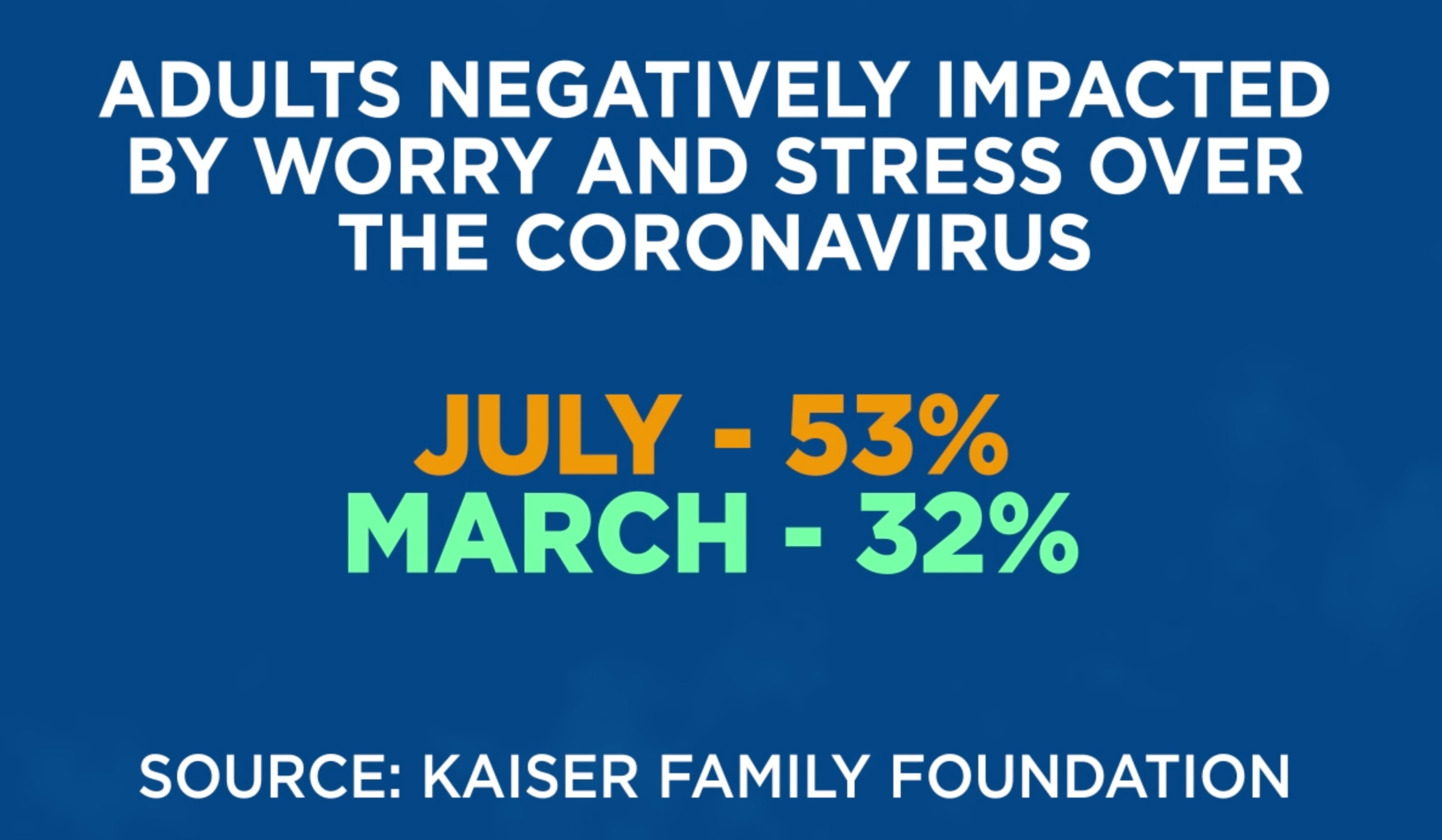
The Kaiser Family Foundation reported that in July, 53 percent of adults had been negatively impacted by worry and stress over the coronavirus. That was up from 32 percent in March.

The National Alliance of Mental Illness has seen a 65 percent increase in calls and emails since the pandemic started.

“We’re all experiencing stress to the point of toxic stress. That’s chronic stress that doesn’t let up,” said Terri Mabrito, Executive Dir. of NAMI San Antonio.

And for many people who had existing mental health issues, the pandemic has been more taxing. Prior to the pandemic, nearly one in five U.S. adults reported having a mental illness in the past year.

“Precisely the thing that protects us from a pandemic, which is isolating yourself. That is precisely the thing that is not helpful and healthy for a person that is struggling with a mental health condition. It’s that perfect storm that’s happening right now,” said Mabrito.

In the video below, we look at how people with chronic mental conditions have lost their outlets to cope with stress and why many experts believe those feelings of isolation and being overwhelmed will be hard to overcome.

“There’s going to be this wave we think for increased mental health problems. And sadly, very likely increased deaths by suicide. So we have a long way to go,” said Mabrito.

Identifying warning signs

There are several warning signs when it comes to mental health problems and burnout. Some of the signs are the simplest things: not eating right, not getting exercise or fresh air and not getting enough sleep which is critical to your mental well being.

Another key warning sign is self-isolation and cutting off communication with family and friends.

The CDC provides several options and healthy ways to cope with stress including:

Take breaks from watching, reading, or listening to news stories, including those on social media. Hearing about the pandemic repeatedly can be upsetting.Take care of your body. Take deep breaths and stretch daily.Try to eat healthy, well-balanced meals, exercise regularly and get plenty of sleep.Connect with your community or faith-based organizations. While social distancing measures are in place, consider connecting online, through social media, or by phone or mail.

For help in the San Antonio area, you can visit nami-sat.org or call the 24-hour Adult Crisis Care Clinic Outreach team at 210-223-7233, or text NAMI to 741-741. If you or someone you know needs help now, call 911.

COVID patients with PTSD

Many COVID survivors are dealing with post traumatic stress disorder (PTSD).

The fear of contracting the virus again. The fear that loved ones will get sick. The isolation they experienced when they were in the hospital are all factors contributing to their PTSD.

KSAT Explains shares how a local man is tackling the disorder by trying to help others.

Impact of COVID on mental health of children

For parents and caregivers, perhaps the next biggest question is how is this affecting children and what are the long term effects?

Children have been taken from their social circles, normal routines and missed out on milestone celebrations like a birthday party. But there are things you can do with your child now to help them weather this storm. One of those options includes a term known as “nurture science.”

It is a unique research program from Columbia University that is rooted in a new, evidence-based understanding of the critical role emotional connection plays in healthy child development. We take a closer look in the video below.

Coping without substances

The anxiety children and adults are feeling is understandable, but how people choose to deal with that is key. There is concern about what happens if people try to manage these feelings in unhealthy ways.

San Antonio Rise Recovery helps teens, young adults and families overcome the effects of drugs and alcohol. Rise Recovery CEO Evita Morin says she’s seen some troubling trends over the past several months.

“What we’ve seen is similar to what the education field has seen, which is that kids are very disconnected,” said Morin. “As a result of that, we see a lot of increases in depression and anxiety. We’re seeing a lot of struggling with sobriety and a lot of relapse.”

While data is still being gathered, a report released over the summer by the CDC shows 13 percent of U.S. adults had started or increased substance use. We also take a closer look how to cope with COVID pandemic without substances.

For substance-related help in the San Antonio area call 210-927-4644. Or you can visit alphahome.org or riserecovery.org.

Silver Linings

Despite the bad, there have been some positive things to come out of the pandemic whether it’s reconnecting with loved ones in a different way or possibly opening new lines of communication with family. We wanted to share a few of those stories in the video below.

Where to get a COVID-19 vaccine in San Antonio

As the COVID-19 vaccine becomes more available, many places are now allowing walk-in appointments throughout San Antonio.

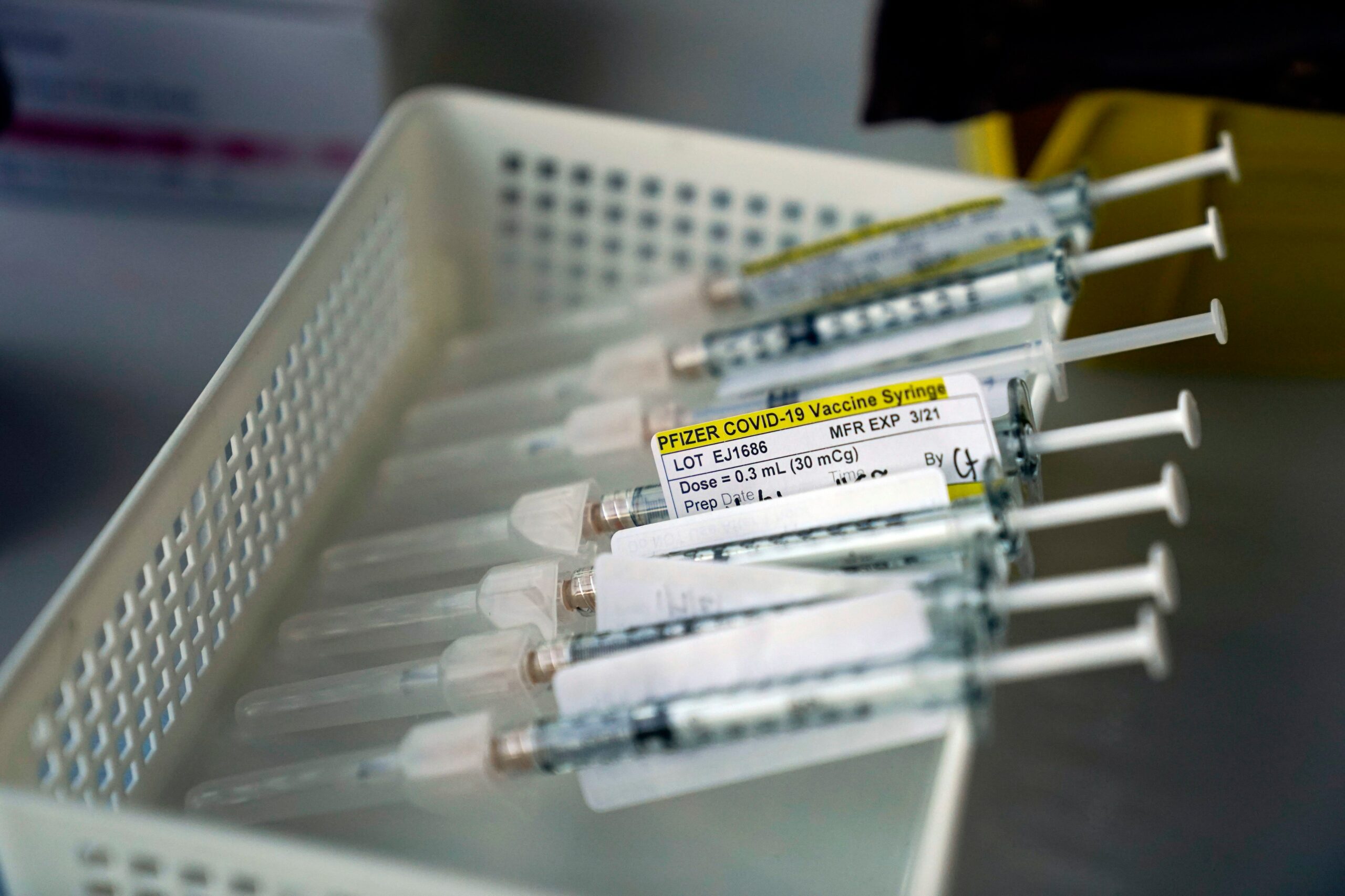
The City of San Antonio is working to distribute thousands of doses of the COVID-19 vaccines, including Moderna, Pfizer, and Johnson and Johnson to eligible residents.

All adults are now eligible to receive the vaccine. Pfizer’s vaccine has been approved for children ages 12 to 15. Moderna is seeking that approval for its vaccine and it’s expected to be granted soon.

San Antonio doctor answers parents’ questions about Pfizer’s COVID-19 vaccine for kids

To ensure seniors get vaccinated, the city has also established a COVID-19 vaccine waitlist for residents who are 65 and older. People can register online in English at sanantonio.gov/waitlist or in Spanish at sanantonio.gov/listadeespera. They can also call 311 and select option 8 or call 210-207-6000 for assistance. The hotline will be open from 7 a.m.-7 p.m. daily.

Doses of the COVID-19 vaccines come from the federal government to the states to be distributed. Texas distributes its allotted vaccines to hospitals, pharmacies, local health departments, freestanding ERs and other clinics. All providers who receive the vaccine are instructed to use them immediately and not keep any in reserve.

How to sign up for a #COVID19 vaccine in #Texas.

Eligible people can sign up with a vaccination hub or a community vaccine provider.
🔹Vaccination hub info: https://t.co/7m6v4KF2Yn
🔹Community provider map: https://t.co/FDEZypNTdb#HealthyTexas #COVID19TX #EveryDoseMatters pic.twitter.com/e1zWLLBtdG

— Texas DSHS (@TexasDSHS) January 20, 2021

Many pharmacies are also receiving doses of the vaccine from the federal government through a retail pharmacy program.

Metro Health’s Alamodome Vaccine Site

The San Antonio Metropolitan Health District administers drive-through vaccines at the Alamodome. Residents can register for an appointment on the Metro Health COVID-19 vaccine registration website. People without internet access can call the 311 Customer Service COVID Hotline from 8 a.m. to 5 p.m. on weekdays and from 8 a.m. to 12 p.m. on weekends.

If appointments are available at the Alamodome, you can register for the vaccine online. Online registration is preferred, but if you need assistance you can call 311 and select option 8. Residents have reported that it can be difficult to reach someone by phone.Anyone that lives in Bexar County or in one of the other 26 municipal districts are able to come to the Alamodome to receive their COVID-19 vaccine, according to city leaders.

University Health

University Health offers the Pfizer vaccine free of charge to people 12 or older on a walk-in basis at multiple pharmacy locations. Locations include:

Robert B. Green Campus Pharmacy: Monday – Saturday 8 a.m. – 5 p.m.Medical Center Pavilion: Monday – Friday 8 a.m. – 5 p.m.Southeast Clinic: Monday – Friday 8 a.m. – 5 p.m.Southwest Clinic: Monday – Friday 8 a.m. – 5 p.m.Texas Diabetes Institute: Monday – Friday 8 a.m. – 5 p.m.

An adult family member or guardian must accompany children to provide written consent for the vaccination. Proof of age is not required.

Other places you may be able to find COVID-19 vaccines:

You may be able to find the vaccine through your primary care physician or other healthcare providers. You can call your providers to see if they have any available.

WellMed has recently consolidated vaccination sites, now taking all appointments at the Elvira Cisneros Senior Community Activity Center. The link can also be found here.

Several sites are now taking walk-in appointments, including Baptist Health Systems, St. Philips College and Texas Vista Medical Center.

Other pharmacies that administer vaccines include CVS Health, Walmart, Sam’s Club, and H-E-B.

Keep up with the latest vaccine news here.

Read more:

‘Come back for your second dose’: Metro Health says more than 100k in Bexar County haven’t gotten second COVID-19 vaccineKSAT Q&A: Pediatric infectious disease specialist answers questions about COVID-19 vaccine for kidsVaccine effort turns into slog as infectious variant spreads

What do you need to know about the COVID-19 vaccines? KSAT Explains

As we near the close of a year that’s been defined by infection and social distance, there is some hope.

The news of successful vaccine developments comes as COVID-19 cases across the U.S. and in San Antonio are rising.

While there is a light at the end of the tunnel, medical experts are warning we are not in the clear yet.

Vaccine development and distribution are just part of the puzzle. Another essential piece is battling disinformation and convincing enough people to get the vaccine.

In this week’s episode of KSAT Explains, we looked at the science behind these vaccines, spoke with medical experts about their safety and got a better understanding of what it will take to end this pandemic.

SMART. IN-DEPTH. LOCAL: Click here for more episodes of KSAT Explains

What we know about the Pfizer and Moderna vaccines

Despite global efforts to find a COVID-19 vaccine, medical and health experts warned everyone that it could take a while.

The previous record for vaccine development was four years. But in early November, the world received welcome news.

Pzifer and Moderna had developed a vaccine that showed promise in clinical trials, but they were different from vaccines that had been developed in the past.

Their vaccines are what’s known as MRNA vaccines. It’s an approach that has not been used in humans before, however, researchers have been studying and working with them for decades.

The federal government approved the use Pfizer’s vaccine on Dec. 11 while the Moderna vaccine was expected to be approved around Dec. 17.

Dr. Ruth Berggren, an infectious disease specialist with UT-Health San Antonio, and Dr. Douglas Denham, Chief Medical Director at Clinical Trials of Texas, explained how the vaccines work and why this process can be effective.

Medical experts who spoke to KSAT Explains stressed we are still learning about these vaccines and this is just the start.

A question we asked is does the vaccine prevent people from spreading the virus or just from becoming infected?

“We still don’t really know how well it’s going to protect people. You can still get an infection and maybe not be as infectious, not have the full symptoms that you would get otherwise,” said Denham.

San Antonio-based Texas Biomed Research Institute worked with the Pfizer vaccine in animal studies.

Dr. Larry Schlesinger, President and CEO of Texas Biomed, said in their clinical trials the vaccine protected 100 percent of the animals from COVID-19. But even so, there was still a little virus detected in the nose of these animals.

“It just depends on how powerful the vaccine is in terms of virus, particularly virus in what we call the upper airways, the nose in the mouth where people cough out,” said Schlesinger.

While the Moderna and Pfizer vaccines will be the first to be distributed, there are more than 100 others in the pipeline.

COVID-19 vaccine and children

The initial stages of vaccine distribution is underway, but a group not expected to get approval for use any time soon is young children.

Pfizer included children 12 years of age and older in some of their later trials and Moderna also recently announced they would begin to incorporate children over 12.

But pediatricians around the country and in San Antonio have said this is a cause for concern.

COVID-19 vaccine distribution timeline in Texas

Developing effective COVID-19 vaccines was a challenge, but it wasn’t the only hard part. Getting millions of people vaccinated will be monumental task.

Texas is expected to receive roughly 1.4 million doses to start. Bexar County alone has a population of around 2 million.

We broke down what the distribution plan is in Texas and who is first in line to get the vaccine.

Are these vaccines safe?

Developing and distributing the vaccine are two significant moves in the right direction to end this pandemic. But enough people need to be willing to get the vaccine to stop transmission.

While the speed the vaccines were developed is unprecedented, it isn’t unexplainable.

These vaccines were built upon prior science that can be traced back to February 2003 when SARS was first identified. Still, a question a lot of people have is are these vaccines safe?

We answer that question and dive into the fear many medical experts have about disinformation with the vaccines.

When will this pandemic end?

This is the million dollar question. The answer is complicated because it relies on science and the actions of everyone.

The vaccine is currently voluntary so it remains to be seen how many people choose to get vaccinated.

“Some of the most recent estimates are that 40 to 50 percent of the population has said they won’t take the vaccine,” said Denham. “So if 40 to 50 percent of the patients don’t take the vaccine, then we’re not going to be able to eradicate this very quickly.”

Doctors say patience will also be key in determining how long immunity lasts, whether it’s through a vaccine or an actual infection.

“That’s a question I think we all want to know. I think there’s reasonable optimism that if there is some level of protection for even months, six months, a year or two years, as opposed to lifetime or five or 10 years, that’s still going to have a major positive effect on reducing transmission rates,” said Schlesinger.

We take a closer look at the challenges ahead even with a vaccine in the picture.

Why did San Antonio declare racism a public health crisis? KSAT Explains

Much of 2020 has been defined by the novel coronavirus. But there’s been another big story, one that some argue is another public health crisis.

In August, after a summer of demonstrations demanding an end to systemic racism and police brutality, the City of San Antonio joined dozens of cities and counties across the country and declared racism a public health crisis.

In this episode of KSAT Explains, we take a look at how racism has shaped health outcomes, how the city plans to address the issue and what it means to treat racism as a public health crisis. (Watch the full episode in the video player above.)

SMART. IN-DEPTH. LOCAL: Click here for more episodes of KSAT Explains

An honest discussion

Three different people. Three different experiences with racism.

Glo Armmer writes corporate contracts by day and works in event planning and promotion by night. Pharaoh Clark is a personal chef and community activist. Josey Garcia has retired from the U.S. Air Force and is now a mother of eight and a community advocate.

Armmer, Clark and Garcia sat down with KSAT Explains host Myra Arthur to discuss their personal experiences and what they hope comes of the city’s declaration.

Why more cities and counties are declaring racism a public health crisis

On August 20, the San Antonio City Council passed a resolution declaring racism a public health crisis. But what does that mean?

More research is showing that race and health outcomes are related.

“We know that racism has an impact on individual health,” local epidemiologist Dr. Cherise Rohr-Allegrini said. “When you think of that collectively, it’s public health.”

Black women are four times more likely to die of pregnancy complications than white women. Latino children have a 50 percent chance of developing diabetes. The average life expectancy of Black Americans is four years lower than the rest of the U.S. population. These are just a few of the stats that have prompted cities and counties in at least 26 states around the country to declare racism a public health crisis.

But not everyone is on board.

Just take a look at the September Bexar Facts-KSAT-San Antonio Report poll. More than 600 registered Bexar County voters were asked by phone and internet if racism should be considered a public health crisis in Bexar County. 49 percent disagreed. 46 percent agreed.

Demonte Alexander, director of external affairs & special projects for Bexar Facts, said that a big indicator of whether someone agrees with the premise that racism is a public health crisis depends on political party affiliation and where a person lives. Alexander said that in Bexar County Precincts 1, 2 and 4, roughly 50 percent of those asked said they believe racism is a public health crisis. But that number dropped significantly for the North Side Precinct 3, which is the most affluent county precinct and has the largest percentage of white residents.

“In Precinct 3 alone, 60 percent feel like this is not an issue,” Alexander said.

But the City of San Antonio’s 2019 Racial Equity Indicator Report demonstrates that people of color often experience worse outcomes in education, health and housing. Here are some of the report’s findings:

Percent of residents 25 or older with less than a high school education: 25.7 percent of Latinos, 9.6 percent of Blacks, 4.8 percent of whitesPercent of residents who have delayed health care in the past year because of cost: 24.1 percent of Latinos, 17.9 percent of Blacks, 10.6 percent of whitesPercent of low birth weight births by race/ethnicity of mother: 14.6 percent of Blacks, 9.1 percent of Latinos, 7.5 percent of whites

What is leading to these disparate outcomes for people of color? A lot of things.

There are obvious problems, things like lack of access to health care and insurance. But there are also systemic problems that play a big role — a lack of access to healthy foods, safe outdoor spaces for exercise and transportation.

History has created systemic issues

A part of acknowledging that racism has played a role in these disparate health outcomes requires taking a look back to identify the root of some of these structural issues. Watch the video below for an explainer on the federal government’s role in denying resources to some communities.

What steps will the city take next?

Since the city’s declaration in August, a citywide action plan hasn’t been presented. But Dr. Sandra Guerra, the Interim Deputy Director of the Metropolitan Health District, said the city has been trying to create an equitable city even before the declaration.

The city’s Office of Equity is dedicated to advancing social equity and dismantling racism. Each year the office releases a report. According to the 2019 report, 4,000 city employees took equity training in 2019.

“It might be words on paper right now, but it definitely has a passion behind it,” Guerra said.

Guerra called the resolution a first step. It lays out some commitments, including:

The city will update the community twice a year about policies and programs that improve racial equityThe city will commit to engaging historically marginalized communities in the development of equitable health policies

But critics say the resolution doesn’t specify any immediate change or allocate money for this specific movement.

“We gave these resolutions with no teeth,” Alexander said. “And that’s where my criticism comes from.”

QUICK GUIDE TO WHAT ELSE YOU’LL SEE IN THIS EPISODE OF KSAT EXPLAINS:

The story behind what inspired a local vascular surgeon to open up her practice on the city’s South SideThe impact of historic racial redlining in San AntonioThe reason why even some who agree with the premise of the city’s resolution worry it will reinforce negative stereotypes

Why will this Election Day will be unlike any other? KSAT Explains

Election day 2020 will be unlike any other in history. Changes at the polls amid the COVID-19 pandemic and the volatile political climate have made this an unprecedented election. Many Bexar County residents are eager to cast their ballots despite the unique circumstances of this year.

SMART. IN-DEPTH. LOCAL: CLICK HERE FOR MORE EPISODES OF KSAT EXPLAINS

In this episode of KSAT Explains, we look at what you can expect to see at the polls, how polling locations have changed in Bexar County and why this year has inspired some people to get more involved in the political process. (Watch the full episode in the video player above.)

Mega voting sites

Voters will have plenty of options when choosing where to vote this year. There are 48 locations for early voting and about 280 locations to vote on election day.

Four of those locations are so-called mega voting sites. These sites are larger and equipped with more voting machines.

The largest of these sites in Bexar County is the AT&T Center. We previewed what the experience will be like voting at the home arena of the San Antonio Spurs and the Stock Show and Rodeo.

Bexar County is spending more than $200,000 on voter outreach and education advertising.

The goal is to connect voters to information about polling locations and safety protocols that are in place, and to remind voters that they can now vote anywhere on election day. You can learn more here.

Registering voters during a pandemic

The mission to get more people to the polls this year isn’t just one Bexar County officials are pushing.

There are volunteers who work every year to make sure voters are registered and informed.

They have adapted to take proper precautions amid the coronavirus pandemic, but their work has not slowed down in 2020.

In this episode, we profiled one of the activists behind Radical Registars.

Meet Valerie Reiffert in the video below. She was inspired to get involved after this summer’s protests against police brutality and racism.

What are the propositions on the ballot

The presidential election and many high-profile local races have received the most attention during this election cycle, but there are important propositions on the ballot.

We explained three propositions on the ballot that will shape part of the future in San Antonio. They include early education, workforce development and public transportation.

QUICK GUIDE TO WHAT ELSE YOU WILL SEE IN THIS EPISODE OF KSAT EXPLAINS:

What will this election day look likeVoter information campaignKey races to watch in 2020 election in Bexar County

RELATED: Who is on the November 2020 election ballot for Bexar County

RELATED: Here’s how, where to vote early in Bexar County

Penguin Cam: Chill with the penguins at SeaWorld San Antonio with 24/7 livestream

What kind of food do penguins like to eat? Brrrrritos! Just kidding.

SeaWorld San Antonio and KSAT are teaming up to bring you what we all need this year – a little happiness. This time, by way of the Penguin Cam.

You now have 24/7 access to view the roughly 250 birds at SeaWorld San Antonio, which includes four species of penguins: king, Gentoo, chinstrap and southern rockhopper.

Watch anywhere, anytime on all of KSAT’s platforms: on our KSAT-TV page on KSAT.com, on our free streaming apps, on our KSAT Kids’ page or by bookmarking this article.

🐧 What can you expect to see on the Penguin Cam?

There’s lots of movement, “instead of sleeping for hours at a time like us, penguins take short, sporadic naps throughout the day and night. This adaptation allows the colony to be on constant alert for predators,” said aviculture staff at SeaWorld San Antonio.

And while you might notice that these flightless birds aren’t exactly agile on land, they’re incredibly fast underwater.

“They generally spend the majority of their lives in the water, so their bodies are perfectly adapted for swimming,” said aviculture staff members. “Some species can swim quite quickly; the gentoo penguin, for example, can reach speeds of up to 22 mph, which is as fast as the average cruise ship.”

You’ll get to see penguins eat as well – the penguins are fed throughout the day with as much fish as they feel like eating. Fish, like herring, capelin, night smelt, and silversides, are tossed in the water in the penguin enclosure and also served on trays in the snow.

“Each individual bird has its own unique personality, so their typical behaviors and activity levels will vary,” aviculture staff said. “Some penguins spend much of their time swimming, while others seem to prefer climbing on rocks and snow piles or hanging out with their caretakers.”

🐧 What’s the deal with the tuxedos?

Aviculture staff said there’s actually an important reason penguins look so formal – having a bright belly and dark back allows the birds to camouflage in the water.

“If a predator were to look down at a swimming penguin, the bird’s dark back would blend in with the seafloor; on the other hand, if the predator were to look up at the penguin, the bird’s bright belly would blend in with the sunlight shining at the surface,” according to the aviculture specialists. “This type of coloration is common in other marine animals too and is known as ‘counter-shading.’”

Some of the penguins have also been given names by caretakers and visitors with certain penguins having fans that come to visit them specifically “like Freckles the rockhopper penguin and Janet the king penguin.”

Every penguin at SeaWorld San Antonio has a special identifying number that allows caretakers to keep accurate health, breeding, and training records and “colorful bands placed around their wings correspond to those identification numbers.”

🐧 But, they’re in a cage…

Many people express concern over keeping animals in “cages” or just generally contained within four walls.

The Penguin Encounter at SeaWorld San Antonio isn’t just a special opportunity for people to meet penguins up close. The park participates in the Species Survival Plan (SSP), “a program to preserve selected species in zoos and aquariums, many of which are struggling in the wild.”

“In addition to SeaWorld’s in-park efforts, the nonprofit Sea World & Busch Gardens Conservation Fund has sponsored projects around the globe that are related to penguin rescue and conservation, such as the Falkland Islands Penguin Census,” said aviculture staff.

Even better? All 18 species of penguins are legally protected.

If you want to learn more about SeaWorld San Antonio’s penguins, you can meet a penguin up-close in a guided Penguin Tour, or chill in the habitat with the whole flock in the Penguin Interaction Program.

Grab a jacket though – it’s 35 degrees in the penguin enclosure.

Visit http://www.seaworld.org/ for more information.

Related:

KANGAROO CAM: Live look inside the tree kangaroo habitat at San Antonio Zoo

Do penguins sneeze? Yep, and here’s what it looks like

Poop scoop: Satellite images reveal Antarctic penguin haunts